 Call us now:


Last Updated: November 25, 2026
Quick Summary
Affordable return to duty testing means budgeting every stage, not just the collection fee: the SAP evaluation, education or treatment, the test itself, C/TPA handling and Clearinghouse reporting, and follow-up testing. Get a written, itemized quote for each line before you commit to a provider. Independent drivers must also arrange the C/TPA to order the test, since there is no employer to do it.
- Your SAP evaluation fee does not cover the return-to-duty test, so budget for it separately.
- Ask your SAP how many follow-up tests the plan includes and over what period.
- Confirm your SAP has released you to test before scheduling the return-to-duty test.
- A qualified SAP conducts the evaluation; a testing provider or C/TPA collects and reports the result.
- RTDStep5 is an FMCSA-registered C/TPA with more than 24,000 testing sites nationwide.
Stuck in prohibited status?RTDStep5 handles your Step 5 test and Clearinghouse reporting so you can get back on the road.
Table of Contents
- How much does a DOT return-to-duty drug test cost for independent drivers?
- Full cost breakdown beyond the initial evaluation
- Schedule DOT return-to-duty test: steps for owner-operators
- DOT return-to-duty drug test cost: what to expect and how to pay
- FMCSA Clearinghouse return-to-duty process explained
- How to verify SAP qualifications and avoid misleading offers
- Choosing a compliant collection site for your RTD test
- Get started on Step 5 with RTDStep5
- Frequently Asked Questions
How much does a DOT return-to-duty drug test cost for independent drivers?
The total cost of a DOT return-to-duty drug test depends on the site and the panel ordered, and pricing depends on the specific services selected. Drivers are most often tripped up not by the test fee itself but by the costs stacked around it. Below, we break down affordable return to duty testing options for independent drivers so you can budget the whole process, not just the collection.
The return-to-duty test is a separate, mandatory step from your SAP evaluation. The FMCSA’s return-to-duty process guidance confirms a driver must complete a return-to-duty test with a negative result before resuming safety-sensitive functions. That means your SAP evaluation fee does not cover it. Budget for it separately.
A common mistake is assuming the cheapest quoted collection price is the real cost. Ask any provider to itemize what its quote includes, so you are comparing like for like.
Here is what the total looks like across the stages:
| Stage | What you pay for | Paid to |
|---|---|---|
| SAP initial evaluation | Face-to-face assessment | SAP |
| Education or treatment | Program you complete | Provider |
| Return-to-duty test | Collection plus lab | Testing site / C/TPA |
| Clearinghouse reporting | C/TPA handling | C/TPA |
| Follow-up testing | Each scheduled test | Testing site / C/TPA |
Full cost breakdown beyond the initial evaluation
Most drivers budget for the SAP evaluation and stop there. That is where the surprises start. The initial evaluation is only the first invoice. After it, you pay for the education or treatment the SAP recommends, the return-to-duty test itself, the C/TPA reporting, and then a follow-up testing schedule.
To estimate your total out-of-pocket cost, work through each stage in order and get a written quote for every line before you commit to a provider. The stages break down like this:
- SAP initial evaluation. A face-to-face assessment with a DOT-qualified SAP. This is a professional service fee paid directly to the SAP. Ask for the evaluation fee in writing before you book.
- Education or treatment. The SAP recommends a level of education or treatment based on the evaluation. This is paid to the education or treatment provider, not the SAP. The recommendation can range from a short education program to more intensive treatment.
- Return-to-duty test. The collection plus the lab analysis, paid to the testing site or the C/TPA handling the order. This is separate from the SAP fee and is not included in it.
- C/TPA handling and Clearinghouse reporting. If a C/TPA orders the test and reports the result, that handling is a separate charge. Ask whether it is bundled into the test price or billed separately.
- Follow-up testing. After you return to duty, the SAP sets a follow-up testing plan. Under the DOT rules, that plan can run for a set period with multiple unannounced tests.
The follow-up testing is the part nobody warns you about. Because the tests are unannounced, you cannot schedule them around your cash flow. If you are budgeting, ask your SAP how many follow-up tests the plan includes and over what period before you commit.
A common pattern is for drivers to underestimate the total because they compare only the SAP evaluation fee across providers. That comparison misses the education, testing, reporting, and follow-up lines. Compare providers on the full set of stages, not the first invoice.
Watch out: a quote that covers only the collection and not the lab or the reporting is not the real price. Ask what the total includes before you pay, and get the follow-up testing expectation in writing.
For a full line-by-line picture of every stage, see our cost of return to duty testing breakdown, which walks through what each stage charges and why.
Schedule DOT return-to-duty test: steps for owner-operators
Independent drivers face one problem employees do not: there is no employer to order the test. You have to coordinate the entire chain yourself. Here are the steps we walk owner-operators through.
- Confirm your SAP has released you to test. You cannot schedule the return-to-duty test until the SAP determines you are ready.
- Choose a DOT-compliant collection site. Not every lab is set up for DOT collections. Verify before you book.
- Arrange the C/TPA to order and receive the test. The test must be ordered correctly so the result is valid.
- Complete the collection and lab analysis. Bring valid ID and follow the site’s instructions exactly.
- Confirm the result is reported to the FMCSA Clearinghouse. This is the step that actually clears your status.
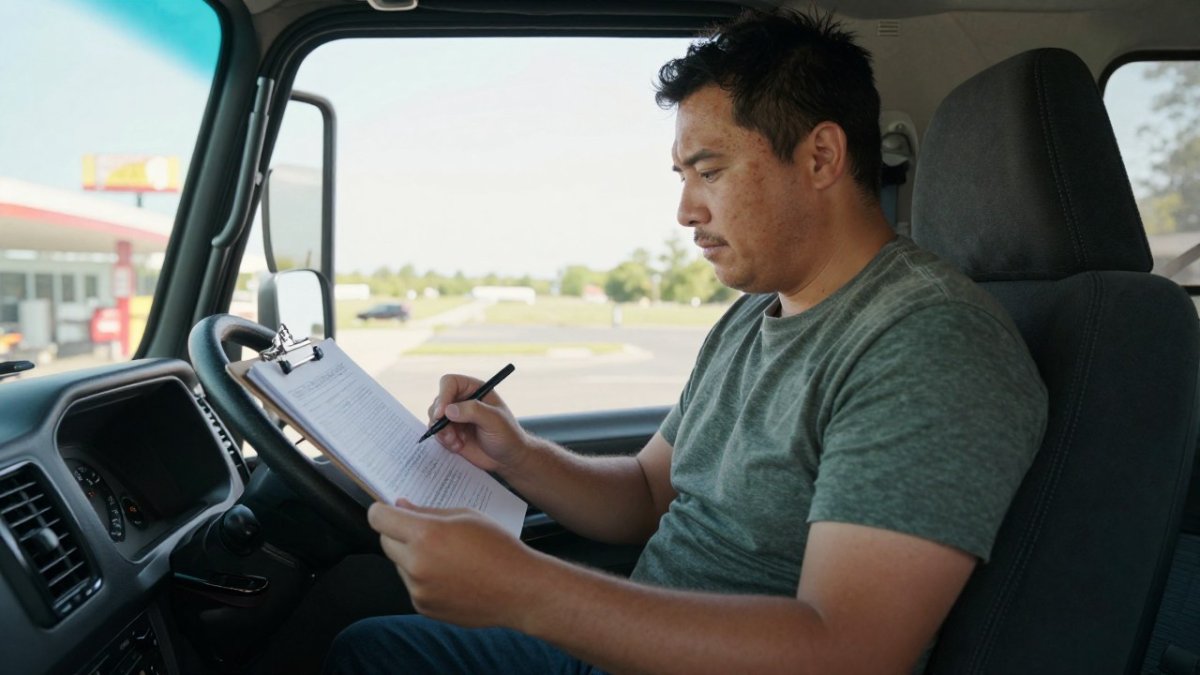
For the detailed scheduling walkthrough, our 7 steps to schedule your DOT RTD drug test covers each stage for owner-operators who have no employer backing the order.
DOT return-to-duty drug test cost: what to expect and how to pay
Pricing depends on the collection site, the panel ordered, and the C/TPA handling the paperwork. Current prices and a quote are available on the RTDStep5 pricing page. What matters is knowing which parts you are paying for so a quote cannot surprise you later.
Payment usually splits across the process. You pay the SAP directly for the evaluation. Ask any provider about payment options before you start, not after.
Watch out: paying a single “all-in” fee to an unverified provider without confirming what it covers is how drivers end up paying twice.
FMCSA Clearinghouse return-to-duty process explained
The FMCSA Clearinghouse return-to-duty process is the sequence a driver must complete to move out of prohibited status and back to safety-sensitive driving. It runs from the violation through the SAP evaluation, the return-to-duty test, and into follow-up testing.
The Clearinghouse is the database that records violations and return-to-duty status. Your prohibited status does not clear until a valid negative return-to-duty test is reported correctly. A test that is collected or reported wrong leaves you stuck, even if you passed. That is why the reporting step matters as much as the test itself.
The FMCSA Clearinghouse is the official record, and it is the only place your status change is confirmed. Keep proof of each stage as you go.
How to verify SAP qualifications and avoid misleading offers
Not every provider advertising SAP services is legitimately qualified. A qualified SAP must meet the DOT’s training and credentialing requirements, and you can and should confirm that before you pay anyone. Misleading offers prey on drivers who are out of work and in a hurry.
The most common confusion is between a SAP and a testing provider. They are not the same role. A SAP conducts the evaluation, makes the education or treatment recommendation, and determines when you are ready for the return-to-duty test.
Use this checklist before you pay anyone:
- Ask for the SAP’s credentials. A legitimate SAP will state their qualification and training background without hesitation. Confirm the credential matches the DOT’s SAP requirements rather than a general counseling or testing certification.
- Confirm the provider is a SAP, not just a testing site. Ask directly: “Will the person evaluating me be a DOT-qualified SAP?” If the answer is vague, treat it as a warning sign.
- Ask what the fee covers. The evaluation fee should be for the SAP assessment. If a provider quotes a single price that claims to cover evaluation, treatment, testing, and reporting, ask for an itemized breakdown of who performs each stage.
- Ask how the test will be ordered and reported. The SAP evaluation and the return-to-duty test are separate steps. Confirm who orders the test and who reports the result to the FMCSA Clearinghouse.
- Be wary of guaranteed outcomes. No one can guarantee a clearance or a fixed timeline before reviewing your file. A provider who promises a guaranteed result without seeing your case is overselling.
A practical way to verify is to ask the provider to walk you through the stages in order, evaluation, recommendation, test, reporting, and name who is responsible for each. A qualified provider can do that clearly. A misleading offer tends to collapse the stages into one vague promise.
Our guide on how to verify your SAP counselor is qualified gives you a practical checklist for confirming a SAP is genuinely credentialed.
Watch out: a provider who promises a guaranteed clearance or a fixed timeline without reviewing your case is overselling. No one can guarantee an outcome before seeing your file.
Choosing a compliant collection site for your RTD test
A compliant collection site is one that follows DOT collection procedures and reports results correctly. Choosing wrong is one of the most common causes of delay, because a flawed collection can invalidate the test and send you back to the start.
Before you book, confirm the site handles DOT collections, that it will follow the correct custody-and-control procedure, and that the result will route to your C/TPA and the Clearinghouse. A convenient location means nothing if the paperwork fails.
Our step-by-step guide on DOT testing site compliance verification shows you exactly how to check a site before you drive there.
Get started on Step 5 with RTDStep5
If you have finished your SAP evaluation and education, the last thing standing between you and the road is a correctly completed return-to-duty test. This is where RTDStep5 removes the guesswork. We are an FMCSA-registered C/TPA with a network of more than 24,000 testing sites nationwide. We provide DOT-compliant Step 5 support and Clearinghouse reporting, so your result lands where it needs to.
You do not need an employer to order the test. If you are an independent driver with no company backing the order, we can process it. Our past clients have worked for the top CDL employers in the country.
If you are ready to schedule, our guide on how to order an RTD test without an employer walks you through it. Then get started with RTDStep5 and clear your prohibited status with a test that is handled correctly the first time.
Frequently Asked Questions
Who pays for a return-to-duty test when a driver is an independent contractor?
Independent contractors and owner-operators typically pay for the return-to-duty test themselves because they do not have an employer sponsoring the test. Pricing depends on the services selected; current prices and a quote are available on the RTDStep5 pricing page. Check whether the price includes Clearinghouse reporting, as that step is required to clear your prohibited status. Ask for a full breakdown before you pay.
How do independent drivers schedule a DOT return-to-duty test?
You can schedule a DOT return-to-duty test through a DOT-qualified service provider, a consortium/third-party administrator (C/TPA), or directly with a collection site that meets federal requirements. You will need your SAP report and a valid photo ID. Confirm that the provider reports results to the FMCSA Clearinghouse and gives you proof of the report.
Can a driver choose any testing site for a return-to-duty test?
No. The testing site must follow DOT drug and alcohol testing procedures, including proper chain-of-custody and specimen handling. Using a non-compliant site can invalidate your test and delay your return to work. Ask your provider to confirm the site’s compliance and reporting process. If you are unsure, ask the provider to confirm the site’s compliance and reporting process.
How long does it take for a return-to-duty test result to be reported?
Reporting to the FMCSA Clearinghouse can take additional time if paperwork is incomplete. Delays often come from missing SAP documentation, incorrect driver information, or a collection site that does not follow proper procedures.
What should drivers compare when choosing a return-to-duty testing service?
Compare total cost, including collection, lab, and reporting fees; the size and location of the testing site network; whether the provider is an FMCSA-registered C/TPA; and how quickly they report to the Clearinghouse. Also ask about any additional fees, payment options, and customer support before you commit.
