 Call us now:

Table of Contents
- What Is the Mandatory RTD Test for CDL Holders?
- When Is an RTD Test Required After a DOT Violation?
- Understanding the SAP Evaluation Process for CDL Drivers
- How to Get Back to Driving After a DOT Violation
- Follow-Up Testing Schedule for CDL Drivers
- Financial Costs and Timeline for Clearing Your Prohibited Status
- Common Mistakes That Delay RTD Clearance
- Frequently Asked Questions
Last Updated: September 20, 2026
What Is the Mandatory RTD Test for CDL Holders?
A mandatory RTD test for CDL holders is the final step in the Return-to-Duty process required by the Federal Motor Carrier Safety Administration (FMCSA) after a commercial driver has tested positive for drugs or alcohol, or refused a test. The RTD test is a drug or alcohol test, identical in format to the initial violation test, conducted under direct observation at an FMCSA-registered collection site. Once the test returns negative, the result must be reported to the FMCSA Clearinghouse to officially clear the driver’s prohibited status and restore their ability to perform safety-sensitive functions.
The mandatory rtd test for cdl holders serves as proof of fitness for duty and a regulatory safeguard ensuring genuine commitment to sobriety before returning to the road. Without a negative result, a driver remains locked in prohibited status in the Clearinghouse, unable to work for any DOT-regulated employer.
The test must be ordered by a C/TPA (Consortium or Third-Party Administrator) registered with FMCSA, collected at a DOT-compliant site, and reported to the Clearinghouse within specific timeframes. Any deviation, ordering outside proper channels, collecting without direct observation, or reporting incorrectly, invalidates the entire RTD attempt.
Pro Tip
The mandatory rtd test for cdl holders must be ordered by an FMCSA-registered C/TPA, not directly by the driver or their employer. This is a critical distinction that prevents informal testing from counting toward RTD clearance.
The mandatory rtd test for cdl holders must be ordered by an FMCSA-registered C/TPA, not directly by the driver or their employer. This is a critical distinction that prevents informal testing from counting toward RTD clearance.
When Is an RTD Test Required After a DOT Violation?
An RTD test is required after a driver completes their SAP-mandated treatment or education program. The FMCSA does not allow the test before SAP completion; the timeline is non-negotiable.
For a first positive drug test with no prior violations, SAP programs typically recommend a minimum 30-day education or treatment period. For alcohol violations or prior violations, the SAP may require 60 to 90 days or more. The SAP determines the duration based on clinical assessment.
Once the SAP issues a written release, the driver can schedule the RTD test promptly. Delays extend the time in prohibited status.
The mandatory rtd test for cdl holders is the only mechanism to exit prohibited status after a verified positive or refusal.
Watch Out
Delaying the RTD test after SAP completion does not reset the clock or reduce requirements. A driver who waits three months to test still faces the same RTD test format and must achieve a negative result. The delay only extends the driver’s time out of work.
Delaying the RTD test after SAP completion does not reset the clock or reduce requirements. A driver who waits three months to test still faces the same RTD test format and must achieve a negative result. The delay only extends the driver’s time out of work.
Understanding the SAP Evaluation Process for CDL Drivers
The Substance Abuse Professional (SAP) evaluation is the mandatory gateway to the RTD process. A qualified SAP, a licensed counselor, physician, or credentialed professional certified by FMCSA, must evaluate and release the driver before an RTD test can occur.
The SAP evaluation typically occurs within days of the positive test result or refusal. The SAP reviews the driver’s history, substance use patterns, and circumstances, then recommends education, treatment, or both. First-time positives often result in a single educational session; prior violations or documented substance abuse may require weeks or months of counseling.
After program completion, the SAP issues a written release. This document is critical; without it, no C/TPA will order an RTD test.
The follow-up testing plan is established during the SAP evaluation. A typical plan requires 6 unannounced tests within 12 months, though higher-risk drivers may face more frequent testing. The SAP determines the frequency based on clinical judgment.
Key Takeaway
The SAP evaluation is not a pass-fail test. It is a clinical assessment that results in a personalized treatment or education plan. The driver must complete this plan before moving to the RTD test, regardless of how long it takes.
The SAP evaluation is not a pass-fail test. It is a clinical assessment that results in a personalized treatment or education plan. The driver must complete this plan before moving to the RTD test, regardless of how long it takes.
How to Get Back to Driving After a DOT Violation
The path back to driving after a DOT violation follows a strict, multi-step sequence. Skipping or rushing any step invalidates the entire process and forces the driver to restart.
Step 1: Receive Notice of Violation
The driver is notified of a positive test result or refusal through their employer or, if unemployed, directly by the testing laboratory or C/TPA. This notice includes information about the violation and next steps. The driver’s status in the FMCSA Clearinghouse immediately changes to “Prohibited.”
Step 2: Schedule and Complete SAP Evaluation
The driver contacts a qualified SAP or is referred to one by their employer. The SAP conducts an evaluation, usually in person or via video, and recommends an education or treatment program. The driver must schedule and complete this program within the timeframe the SAP specifies.
Step 3: Obtain SAP Release
Once the program is complete, the SAP issues a written release stating the driver has fulfilled all requirements. This document is essential for the next step.
Step 4: Contact a C/TPA to Order the RTD Test
The driver contacts an FMCSA-registered C/TPA to order the mandatory rtd test for cdl holders. The C/TPA verifies the SAP release, confirms prohibited status in the Clearinghouse, and schedules the test at a DOT-compliant collection site.
Step 5: Complete the RTD Test
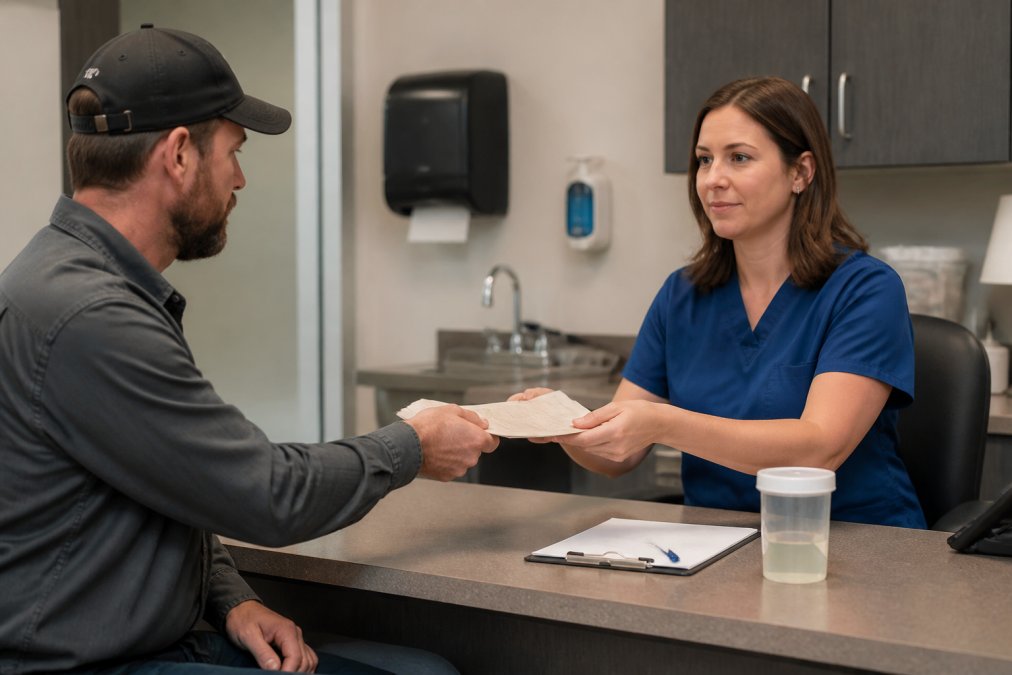
The driver reports to the collection site at the scheduled time. The test is conducted under direct observation and is identical in format to the original violation test. The driver must provide a valid specimen; inability to do so is recorded as a refusal.
Step 6: Receive Results and Clearinghouse Reporting
The test is sent to a laboratory for analysis. If negative, the C/TPA reports the result to the FMCSA Clearinghouse, and the driver’s status changes from “Prohibited” to “Cleared” within one to three business days.
Best For
Drivers who have completed their SAP program and need to schedule their RTD test with a reliable, FMCSA-registered C/TPA that handles Clearinghouse reporting correctly the first time.
Drivers who have completed their SAP program and need to schedule their RTD test with a reliable, FMCSA-registered C/TPA that handles Clearinghouse reporting correctly the first time.
Follow-Up Testing Schedule for CDL Drivers
After a driver passes their RTD test and clears their prohibited status, the SAP’s follow-up testing plan takes effect. This is a regulatory requirement for all drivers who have completed the RTD process.
Financial Costs and Timeline for Clearing Your Prohibited Status
The total cost of the RTD process varies depending on the SAP program and C/TPA selected. Drivers should budget for the SAP evaluation, treatment or education program, the RTD test, and C/TPA fees.
Common Mistakes That Delay RTD Clearance
Understanding the most frequent errors helps drivers avoid them and clear their status faster.
| Step | Timeline | Key Action |
|---|---|---|
| Violation Notification | Immediate | Driver enters Prohibited status |
| SAP Evaluation | 1-2 weeks | SAP assesses and recommends program |
| Treatment/Education | 1-12 weeks | Driver completes SAP-mandated program |
| SAP Release | Upon completion | SAP issues written clearance |
| RTD Test Scheduling | 1-2 weeks | C/TPA orders test at collection site |
| RTD Test Completion | 1 day | Driver provides specimen under observation |
| Clearinghouse Reporting | 1-3 business days | Status changes to Cleared |
| Follow-Up Testing | 12 months | 6 unannounced tests required |
Frequently Asked Questions
What is the mandatory RTD test for CDL holders?
The mandatory Return-to-Duty (RTD) test is the final step required for CDL holders to clear a prohibited status in the FMCSA Clearinghouse after a verified positive drug or alcohol test or refusal to test. This test must be administered by a DOT-compliant medical review officer and reported directly to the Clearinghouse. It is the only way to regain eligibility for safety-sensitive driving functions.
How long does the RTD process take for CDL drivers?
The timeline depends on when you complete your SAP evaluation and treatment requirements. After finishing SAP education, you can schedule your RTD test immediately. The test itself takes 30-60 minutes. Once completed and verified negative, the result is reported to the FMCSA Clearinghouse, typically clearing your prohibited status within 1-3 business days, allowing you to return to safety-sensitive functions.
What happens if I fail the RTD test after a drug or alcohol violation?
A failed RTD test means you are not yet fit for duty and cannot clear your prohibited status. You must restart the entire SAP process, including a new evaluation, treatment program, and follow-up testing plan. This can extend your prohibited status by several months. A failed test also creates a violation record in your FMCSA profile, which may affect future employment and compliance audits with potential employers.
Can I schedule an RTD test without an employer if I am unemployed?
Yes. As a CDL holder, you can initiate your own RTD test through a DOT-compliant C/TPA (Consortium/Third Party Administrator) like RTDStep5, even without employer sponsorship. You are responsible for arranging and paying for the test. Once completed and reported to the Clearinghouse as a negative result, your prohibited status clears regardless of employment status, allowing you to apply for new safety-sensitive driving positions.
What is the difference between an RTD test and a standard random drug test?
An RTD test is a mandatory, single negative test required after SAP completion to clear a prohibited status. A random drug test is part of ongoing compliance for drivers already cleared. RTD tests must be verified negative by a medical review officer and reported to the FMCSA Clearinghouse specifically. Random tests are conducted as part of employer compliance programs and do not clear a prohibited status.
How do I know my RTD test result was reported correctly to the FMCSA Clearinghouse?
Your C/TPA or testing provider should provide you with a receipt or confirmation number after your test. You can verify reporting by logging into your FMCSA Clearinghouse account and checking your driver record. Your prohibited status should change to cleared within 1-3 business days of a verified negative result. If it does not update, contact your testing provider immediately to confirm submission and investigate any reporting errors.
What happens if there is a paperwork or reporting error with my RTD test?
If an error occurs, contact your C/TPA or testing provider immediately. DOT-compliant providers are responsible for correcting errors and resubmitting results to the Clearinghouse. If your test was conducted correctly but reported incorrectly, the provider should file an appeal or correction with FMCSA on your behalf at no additional cost. Reputable C/TPAs like RTDStep5 handle these issues as part of their compliance guarantee, ensuring your record is corrected promptly.