 Call us now:

Table of Contents
- What RTD Testing Means for Owner Operators
- How Owner Operators End Up With FMCSA Clearinghouse Prohibited Status
- The SAP Evaluation Process for CDL Drivers: What Comes Before Your RTD Test
- Step-by-Step: Completing RTD Testing for Owner Operators Without an Employer
- Navigating the Clearinghouse Portal: Reporting Your RTD Test Result
- DOT Drug Test Follow-Up Schedule After Return to Duty
- RTD Testing Costs and Timeline for Owner Operators
- Conclusion
- Frequently Asked Questions
Last Updated: September 14, 2026
What RTD Testing Means for Owner Operators
RTD testing for owner operators is the final, mandatory drug or alcohol test a CDL driver must pass before the FMCSA Clearinghouse will remove a “prohibited” status and allow a return to safety-sensitive driving. This guide from RTDStep5 walks through the entire process, from SAP evaluation to Clearinghouse reporting.
For drivers who own their own truck, the process is harder than it is for company drivers. There is no employer to order the test, no safety director to file the paperwork, and no dispatcher checking the Clearinghouse record. The owner-operator carries every step alone.
That gap is where most delays happen. Understanding the sequence before you start saves weeks.
How Owner Operators End Up With FMCSA Clearinghouse Prohibited Status
Prohibited status is not always the result of a failed test. The FMCSA Clearinghouse, run by the Federal Motor Carrier Safety Administration, flags a CDL driver as prohibited after any verified drug or alcohol violation, including a refusal to test, an alcohol concentration of 0.04 or higher, or a positive specimen result confirmed by a Medical Review Officer.
Once reported, the driver cannot perform safety-sensitive functions. For an owner-operator, that means the truck sits. There is no light-duty assignment to fall back on, and no employer to coordinate the return.
A common mistake is assuming the violation clears on its own after a set period. It does not. The Clearinghouse only removes prohibited status after the driver completes the full return-to-duty sequence, and RTD testing is the last requirement in that chain.
The SAP Evaluation Process for CDL Drivers: What Comes Before Your RTD Test
The SAP evaluation process for CDL drivers must be completed before any return-to-duty test can be ordered. A Substance Abuse Professional is a licensed clinician who assesses the driver, recommends a treatment or education program, and later confirms that the driver has complied.
The sequence runs in this order:
- The driver selects a qualified SAP and completes the initial evaluation.
- The SAP prescribes education or treatment.
- The driver completes the prescribed program.
- The SAP conducts a follow-up evaluation and issues a written report.
- Only then can the driver schedule the return-to-duty test.
What most guides miss is that the SAP cannot order the RTD test itself. The SAP clears the driver for testing; the test must be arranged separately through a C/TPA or qualified third party. That handoff is where owner-operators stall, because there is no employer sitting in the middle to make the call.
Step-by-Step: Completing RTD Testing for Owner Operators Without an Employer
An owner-operator can complete RTD testing without an employer by using a consortium/third-party administrator, or C/TPA, to order the test, manage the chain of custody, and report the result to the Clearinghouse. This is the single most important workaround in the entire process.
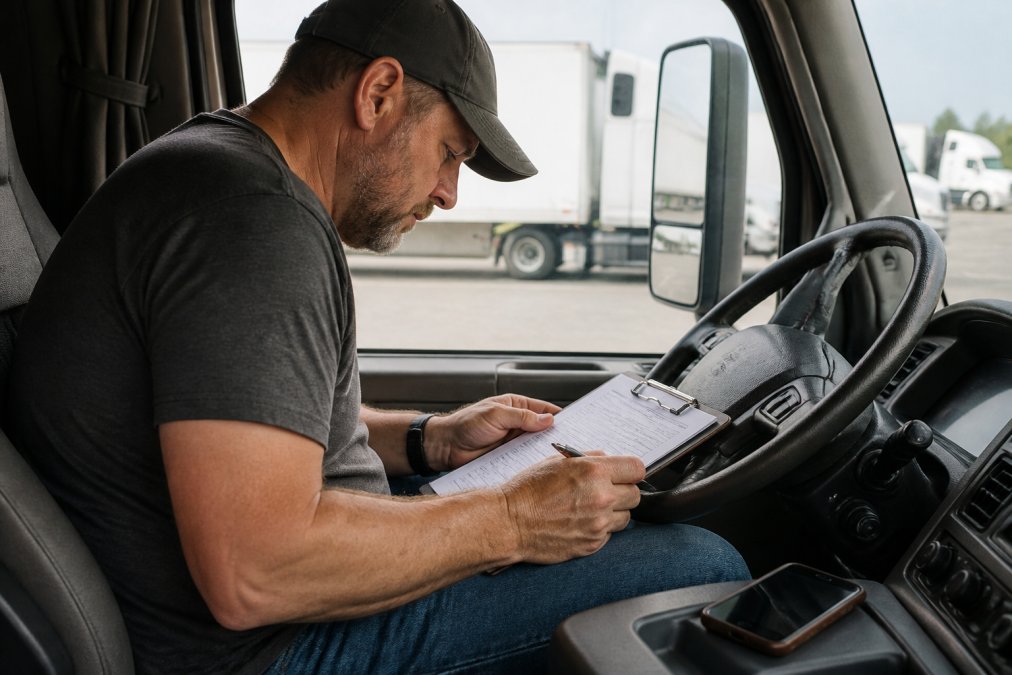
Here is the sequence that works:
- Confirm your SAP has issued the written return-to-duty authorization.
- Engage a C/TPA that is registered with the FMCSA Clearinghouse and can act as your employer of record for testing purposes.
- Receive the test authorization and locate a DOT-compliant collection site.
- Complete the specimen collection under proper chain-of-custody protocol.
- Wait for the laboratory analysis and the Medical Review Officer’s verified result.
- Confirm the C/TPA has reported the negative result to the Clearinghouse.
Watch Out
Never use a collection site that cannot produce a federal custody and control form. A test run outside DOT protocol will not be accepted by the Clearinghouse, and you will pay for it twice (transportation.gov).
Never use a collection site that cannot produce a federal custody and control form. A test run outside DOT protocol will not be accepted by the Clearinghouse, and you will pay for it twice (transportation.gov).
RTDStep5 handles steps 2 through 6 as an FMCSA-registered C/TPA, with access to more than 24,000 testing sites nationwide. For drivers in rural areas, that network matters: the nearest compliant collection site is usually a short drive, not a six-hour haul.
Navigating the Clearinghouse Portal: Reporting Your RTD Test Result
This is the step where owner-operators most often get stuck, because the reporting is not done by the driver. It is done by the C/TPA, and the driver’s job is to make sure the C/TPA is properly designated and then verify the record cleared. Understanding who does what on the portal prevents the most common failure: a driver who passes the test but stays prohibited because nobody reported it.
Who reports what
The FMCSA Clearinghouse is a secure online database. Employers and C/TPAs report violations and return-to-duty results; drivers register, designate their C/TPA, and can view their own record. An owner-operator has no employer, so the C/TPA acts as the employer of record for testing and reporting purposes. That designation is what gives the C/TPA the legal authority to file your RTD result.
If the designation is not active, the C/TPA cannot report, and your negative test sits in a file instead of clearing your record.
Driver-side portal walkthrough
- Log into the Clearinghouse with your verified login credentials (the same account you used to register).
- Open My Dashboard and check your current prohibited status.
- Go to My C/TPAs and confirm your C/TPA designation is active and lists the correct administrator.
- After the C/TPA reports the verified negative result, refresh the dashboard to confirm the prohibited status has been removed.
- Download or screenshot the cleared record as proof for future employers, insurers, or auditors.
What the C/TPA does on its side
The C/TPA logs in under its own administrator account, selects your record, and files the return-to-duty test result. The system requires the specific test type and result to be entered correctly. If the C/TPA files the wrong test type, the record will not clear even though the test was negative. This is why you should confirm the C/TPA has reported, not assume it.
If the status does not change
If your dashboard still shows prohibited more than a few business days after the verified result, do not wait. Contact the C/TPA directly and ask for confirmation that the RTD result was filed. Common causes of a stalled record:
- The C/TPA designation was never activated, so the administrator had no authority to report.
- The result was filed under the wrong test type.
- The MRO review was not yet complete when the C/TPA attempted to file.
Watch Out
Do not assume the system will update on its own. A cleared test that is never reported leaves you in prohibited status, and you will not be able to drive until it is fixed.
Do not assume the system will update on its own. A cleared test that is never reported leaves you in prohibited status, and you will not be able to drive until it is fixed.
Key Takeaway
The driver’s portal job is small but critical: register, designate the C/TPA, and verify the cleared record. The reporting itself is the C/TPA’s responsibility, and confirming it happened is the step most owner-operators skip.
The driver’s portal job is small but critical: register, designate the C/TPA, and verify the cleared record. The reporting itself is the C/TPA’s responsibility, and confirming it happened is the step most owner-operators skip.
DOT Drug Test Follow-Up Schedule After Return to Duty
The DOT drug test follow-up schedule does not end when the RTD test is passed. Under FMCSA regulations, a driver who has returned to duty must complete a follow-up testing plan written by the SAP, and that plan is separate from the return-to-duty test itself.
The follow-up plan typically runs for at least 12 months and can extend to 60 months, with a minimum of six unannounced tests in the first year (fmcsa.dot.gov). The SAP sets the exact number and frequency. The tests are unannounced, which means the driver must be reachable and ready to report to a collection site on short notice.
| Phase | What Happens | Who Orders It |
|---|---|---|
| SAP evaluation | Assessment and treatment plan | Driver selects SAP |
| Education/treatment | Prescribed program completed | Driver |
| Follow-up evaluation | SAP issues RTD authorization | SAP |
| RTD test | One negative test required | C/TPA |
| Follow-up testing | 6+ unannounced tests over 12-60 months | C/TPA |
Pro Tip
Keep a copy of your SAP’s follow-up testing plan. If you change C/TPAs or move states, the new administrator needs the exact plan to keep your testing schedule compliant.
Keep a copy of your SAP’s follow-up testing plan. If you change C/TPAs or move states, the new administrator needs the exact plan to keep your testing schedule compliant.
RTD Testing Costs and Timeline for Owner Operators
Most guides on RTD testing stop at “costs vary.” That is technically true and practically useless when you are an owner-operator staring at a truck payment and no dispatch. Here is the realistic breakdown, based on how the process actually runs for self-employed CDL drivers.
What the full RTD process actually costs
There is no single published price because three separate vendors bill you, and each sets its own rates. What you can do is budget by line item:
| Line item | Typical range | Who bills you |
|---|---|---|
| SAP initial evaluation | A few hundred dollars | The SAP (licensed clinician) |
| Education or treatment program | Varies widely; outpatient education is the low end, inpatient treatment is the high end | The treatment provider |
| SAP follow-up evaluation and written report | A few hundred dollars | The SAP |
| Return-to-duty drug or alcohol test | Low hundreds | The C/TPA or collection site |
| Clearinghouse reporting | Often bundled into the C/TPA fee | The C/TPA |
| Follow-up testing (6+ tests over 12-60 months) | Per-test fee, multiplied across the plan | The C/TPA |
Two things drive the total more than anything else: whether the SAP prescribes education only or a full treatment program, and how many follow-up tests the SAP writes into your plan. A driver who completes an education program and a short follow-up schedule pays a fraction of what a driver ordered into inpatient treatment with a 60-month plan pays.
Ask your SAP for the written treatment recommendation before you commit, and ask your C/TPA for a per-test price and a reporting fee in writing. The vendors who will not put numbers in writing are the ones to avoid.
Realistic timeline from violation to cleared status
The timeline is the part that costs owner-operators the most, because every week in prohibited status is a week with no revenue and a truck payment still due.
- SAP initial evaluation: usually schedulable within days, but depends on the clinician’s availability in your area.
- Education or treatment program: this is the long pole. An education program can wrap in a few weeks; a treatment program can run months.
- SAP follow-up evaluation and RTD authorization: typically within days of finishing the program.
- RTD test scheduling and collection: usually a few days once the authorization is issued.
- Laboratory analysis and MRO review: several business days.
- Clearinghouse reporting: typically within a few business days of the verified result.
A common pattern is that the testing and reporting steps together take roughly one to two weeks. The treatment phase is what stretches the total into weeks or months, and it is also the phase you have the least control over. That is why the single highest-leverage move is getting the SAP evaluation scheduled immediately after the violation, not after you have saved up for it.
The cost competitors never put on the page
The real cost is not the SAP invoice. It is the lost revenue. An owner-operator who cannot drive is still paying insurance, truck note, parking, and possibly a trailer lease. A week of prohibited status can easily exceed the entire vendor cost of the RTD process. Speeding up the testing and reporting step is almost always cheaper than the income lost by waiting on it.
RTDStep5 publishes current pricing on its website, and the service includes Clearinghouse reporting, so there is no separate filing step to arrange or pay for. For drivers who have already spent money on the SAP program, that transparency matters.
Pro Tip
Get the SAP’s written treatment recommendation and the C/TPA’s per-test and reporting fees before you sign anything. A verbal estimate is not a budget.
Get the SAP’s written treatment recommendation and the C/TPA’s per-test and reporting fees before you sign anything. A verbal estimate is not a budget.
Conclusion
The hardest part of clearing a prohibited status is not the test itself. It is the coordination between SAP, C/TPA, collection site, laboratory, and Clearinghouse, all of which normally falls to an employer that an owner-operator does not have.
RTDStep5 exists to close that gap. As an FMCSA-registered C/TPA with 24,000+ testing sites nationwide, RTDStep5 orders your Step 5 test, manages the DOT-compliant chain of custody, and reports the verified result directly to the Clearinghouse so your prohibited status clears correctly the first time.
Get started on Step 5 now and put the paperwork behind you.
Frequently Asked Questions
What happens if you fail the RTD test?
A failed RTD test means you remain in prohibited status and cannot perform safety-sensitive functions. The verified positive result is reported to the FMCSA Clearinghouse, and you must restart the return-to-duty process: a new SAP evaluation, education or treatment, and another RTD test. Follow-up testing requirements may also reset. Until you complete the full process again and produce a negative test result, you cannot legally drive a commercial motor vehicle.
Can an owner-operator schedule their own RTD test?
Yes. Owner-operators without a current employer can order their own RTD test through an FMCSA-registered C/TPA. The C/TPA acts as the employer of record for testing purposes, authorizes the test at a DOT-compliant collection site, and reports the verified result to the Clearinghouse. You do not need an employer to sponsor the test, but you do need a C/TPA to handle the order and reporting correctly.
How long does the RTD process take for owner-operators?
Timelines vary based on SAP scheduling, treatment requirements, and testing site availability. The SAP evaluation and any required education or treatment can take several weeks. Once the SAP confirms you are eligible, the RTD test itself is typically completed within days, and Clearinghouse reporting follows shortly after. Delays usually come from paperwork errors or waiting on an unresponsive employer, which is why many owner-operators use a C/TPA to control the pace.
How often are owner-operators drug tested after returning to duty?
After completing the RTD process, you enter a follow-up testing schedule set by your SAP. The DOT drug test follow-up schedule requires at least six unannounced tests in the first 12 months, with the possibility of up to 60 months of follow-up testing. The exact frequency is determined by the SAP based on your evaluation. These tests are separate from random testing and must be completed to maintain your cleared status.