 Call us now:

Table of Contents
- What the Step 5 RTD Test Is and Why It Decides Your Return
- DOT Return to Duty Test Rules You Have to Meet
- Return to Duty Test Under Direct Observation: What Happens at the Site
- How to Get Back to Driving After a Drug Violation: A Step-by-Step Path
- FMCSA Clearinghouse Prohibited Status Removal: How Reporting Actually Works
- Common Mistakes That Delay or Derail a Step 5 Test
- Frequently Asked Questions
Last Updated: September 13, 2026
What the Step 5 RTD Test Is and Why It Decides Your Return
The step 5 rtd test is the final drug or alcohol test a CDL driver must pass to clear a “prohibited” status in the FMCSA Clearinghouse. It follows a SAP evaluation, education or treatment, and a return-to-duty recommendation. Without it, you stay sidelined no matter how much of the program you’ve finished.
A return-to-duty (RTD) test is a DOT-regulated drug or alcohol test that a driver takes after completing the SAP process and before resuming safety-sensitive functions. It is not a routine pre-employment screen. It is a distinct test type, ordered under a specific testing authority, and reported through a specific channel.
This guide from RTDStep5 covers the requirements, the site protocol, and the documentation that decides whether your test counts.
How Step 5 Fits Into the SAP Return-to-Duty Process
The SAP process runs in sequence, and Step 5 is the gate at the end of it.
- Removal from safety-sensitive functions after a violation
- SAP evaluation to determine what help you need
- Education or treatment as prescribed
- Return-to-duty recommendation issued by the SAP
- Return-to-duty test with a verified negative result
Steps 1 through 4 produce paperwork. Step 5 produces the result that matters to the Clearinghouse. A SAP recommendation alone does not restore your eligibility, and drivers who assume otherwise often wait weeks before realizing the test was never ordered.
Who Must Take a Step 5 RTD Test
Any driver in prohibited status who wants to drive a commercial motor vehicle again must complete a return-to-duty test with a verified negative result. That includes drivers who were terminated, drivers who resigned, and owner-operators with no carrier.
The obligation follows the driver, not the employer. If you hold a CDL and want to return to safety-sensitive driving, the test applies to you.
DOT Return to Duty Test Rules You Have to Meet
DOT return to duty test rules set the conditions that make your result legally valid. Miss one and the test may not count, even if you passed it.
The core requirements:
- The test must be ordered under the correct testing authority, not as a pre-employment or random test
- It must be administered at a DOT-compliant collection site
- It must follow the standard testing protocol for the specimen type
- The result must be reviewed and reported through the proper chain of custody
- A verified negative result must be transmitted to the FMCSA Clearinghouse
The FMCSA drug and alcohol testing regulations define these conditions, and the DOT drug and alcohol testing rules govern how specimens are collected and reported.
Here’s where most drivers get tripped up. A test that looks identical to a return-to-duty test on paper can be coded wrong in the system, and a miscoded test does not clear your status. The testing authority field is the one that matters most.
Return to Duty Test Under Direct Observation: What Happens at the Site
A return-to-duty test is conducted under direct observation, meaning a same-gender observer watches the specimen leave your body (transportation.gov). This is not optional and not a sign that you’re being singled out. It is a mandatory part of the testing protocol for RTD and follow-up tests under 49 CFR Part 40.
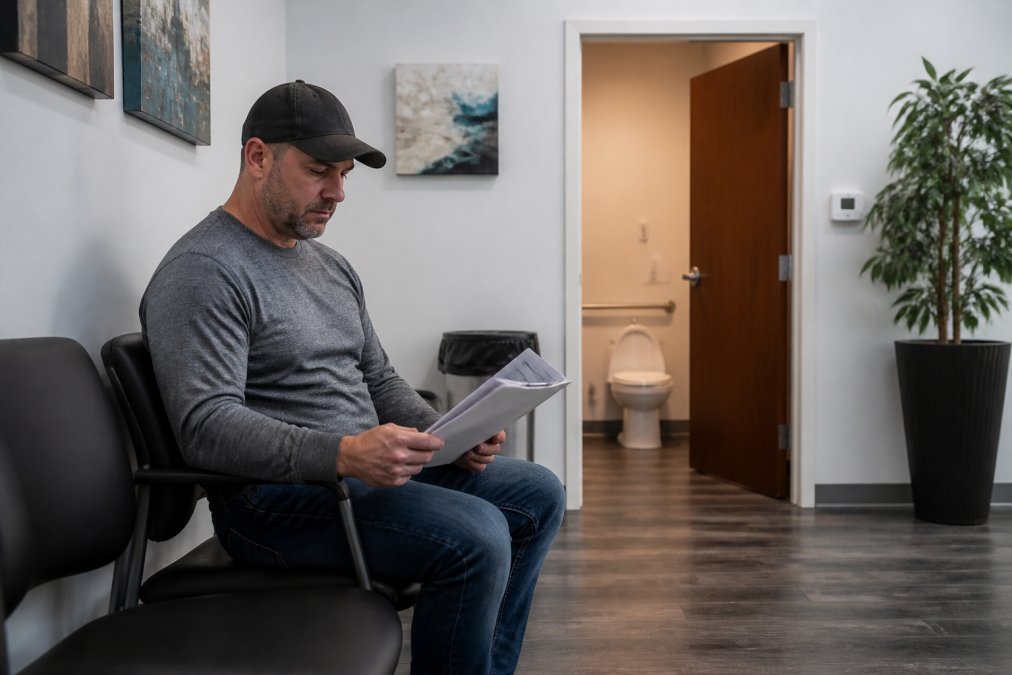
What Actually Happens, Step by Step
- You arrive at the collection site and present your government-issued photo ID and testing authority paperwork.
- The collector verifies the order, confirms the testing authority is coded as return-to-duty (not pre-employment or random), and prepares the specimen containers.
- A same-gender observer accompanies you into the collection area. The observer must be the same gender as you and must be present to watch the specimen leave your body.
- The specimen is collected under direct observation. You must wash your hands before the collection and must not have access to water, soap, or anything else that could dilute or adulterate the specimen.
- You watch the collector seal and label the specimen in your presence.
- You sign the chain of custody form (Federal Drug Testing Custody and Control Form, or CCF) and receive your copy.
- The specimen ships to a certified laboratory, and the result is routed through the Medical Review Officer (MRO) before it posts to the Clearinghouse.
The Shy-Bladder Rule
If you cannot produce a specimen within a reasonable time, the collector must follow the shy-bladder procedure. You are given up to 40 ounces of fluid to drink over a period of up to three hours, or until you produce a specimen. If you still cannot produce a specimen, the collector discontinues the collection and notifies your employer or C/TPA. A shy-bladder situation is not automatically a refusal, but leaving the site before the process is complete can be treated as one.
What Counts as a Refusal
A refusal to test is treated the same as a positive result for Clearinghouse purposes. Common refusals during an RTD collection include:
- Leaving the collection site before the process is complete
- Failing to appear for the test within the required time
- Refusing to sign the CCF
- Adulterating or substituting a specimen
- Failing to cooperate with the observer
If a refusal is reported, you do not simply retake the test. You re-enter the SAP process from the evaluation stage.
What the Collector Documents
The collector records the observed collection on the CCF, including the specific reason the observation was required. That documentation is what allows the MRO and the Clearinghouse to verify the test was conducted under the correct authority. If the observation box is not marked correctly, the test can be rejected even if the result is negative.
Watch Out
The most common failure point is showing up at a site that is not set up for observed collections or does not handle RTD testing authority correctly. If the site codes your test as routine, you can pass it and still stay prohibited. Confirm the site handles return-to-duty testing before you drive there.
The most common failure point is showing up at a site that is not set up for observed collections or does not handle RTD testing authority correctly. If the site codes your test as routine, you can pass it and still stay prohibited. Confirm the site handles return-to-duty testing before you drive there.
Pro Tip
Ask the collector to confirm out loud that the CCF is marked for return-to-duty testing authority before you sign. Once the form is sealed, that field cannot be changed.
Ask the collector to confirm out loud that the CCF is marked for return-to-duty testing authority before you sign. Once the form is sealed, that field cannot be changed.
How to Get Back to Driving After a Drug Violation: A Step-by-Step Path
Knowing how to get back to driving after a drug violation comes down to sequencing. The drivers who return fastest are the ones who finish each step in order and keep every document.
- Complete your SAP evaluation and follow the prescribed education or treatment
- Get your SAP’s return-to-duty recommendation in writing
- Confirm your testing authority so the test is ordered correctly
- Schedule your Step 5 test at a DOT-compliant site
- Take the test under direct observation and keep your copy of the custody form
- Wait for the verified negative result from the lab through the MRO
- Confirm Clearinghouse reporting and check that your status updated
The order matters. Scheduling before your SAP recommendation is issued wastes a test and, in some cases, a fee.
Documentation Checklist Before You Schedule
Have these ready before you book. Missing paperwork is the single biggest cause of wasted trips.
- SAP evaluation report
- Proof of completed education or treatment
- Written return-to-duty recommendation from your SAP
- Government-issued photo ID
- Your Clearinghouse driver record access
- Testing authority details for the order
- Contact information for your C/TPA or testing coordinator
Pro Tip
Photograph every document and every signed custody form before you leave the site. If a result is reported incorrectly or a form goes missing, your own copy is often the fastest way to resolve it. Collection sites and labs handle high volumes, and having your own record shortens the dispute process considerably.
Photograph every document and every signed custody form before you leave the site. If a result is reported incorrectly or a form goes missing, your own copy is often the fastest way to resolve it. Collection sites and labs handle high volumes, and having your own record shortens the dispute process considerably.
What the Process Costs and How to Avoid Repeat Fees
Pricing depends on the site, the specimen type, and the reporting path, so check current rates directly with RTDStep5 before you schedule. What drives cost up is repetition, not the test itself.
Repeat fees come from three sources: tests ordered under the wrong authority, tests taken at non-compliant sites, and results that never get reported. Each one means paying again and losing days. The cheapest path through Step 5 is getting it right the first time.
FMCSA Clearinghouse Prohibited Status Removal: How Reporting Actually Works
FMCSA Clearinghouse prohibited status removal happens when a verified negative return-to-duty result is reported into the Clearinghouse against your record. The report is what clears you, not the test itself.
The reporting chain runs: collection site to laboratory, laboratory to Medical Review Officer, MRO to the Clearinghouse. Each handoff is a place where a result can stall. A negative result that never reaches the Clearinghouse leaves your status unchanged.
You can check your own status through your Clearinghouse driver account. If the result has posted, your prohibited status should reflect it. If it hasn’t posted after a reasonable window, that’s the signal to trace the reporting chain rather than retest.
Owner-Operators and Unemployed Drivers: Who Orders the Test
Drivers without an employer still need a valid testing authority to order the test. This is the question that stalls the most owner-operators.
A C/TPA can serve as the testing authority and handle the order, the collection, and the Clearinghouse reporting on your behalf. RTDStep5 is an FMCSA-registered C/TPA with a nationwide network of more than 24,000 testing sites, which means owner-operators in rural areas can usually find a compliant site without a long drive. The service handles the order, the observed collection, and the reporting so the result actually lands in the Clearinghouse.
Common Mistakes That Delay or Derail a Step 5 Test
The mistakes that cost drivers the most time are administrative, not biological. Here are the ones that show up repeatedly.
| Mistake | What It Causes | The Fix |
|---|---|---|
| Wrong testing authority | Test does not count toward RTD | Confirm RTD authority before booking |
| Non-compliant collection site | Invalid or unreported result | Verify DOT compliance and observed-collection capability |
| Missing SAP documentation | Site turns you away | Bring the full checklist |
| No copy of custody form | Slow dispute if result is wrong | Photograph every signed form |
| Assuming the test clears you | Status stays prohibited | Confirm the result posted in the Clearinghouse |
The pattern behind all five: drivers treat Step 5 as a single event. It is a chain of custody, reporting, and verification. Break any link and the whole thing has to be redone.
Frequently Asked Questions
What are the Step 5 RTD test requirements I need to meet?
You must complete a SAP evaluation, finish the prescribed education or treatment, and receive a written SAP report clearing you for return-to-duty testing. The test itself is a DOT-regulated drug or alcohol test ordered by an employer or C/TPA. It must be conducted at a certified collection site, follow direct observation for drug tests, and be reported to the FMCSA Clearinghouse. Without all of these, your prohibited status stays in place.
Is the return-to-duty test observed or unobserved?
A return-to-duty drug test is conducted under direct observation, per DOT rules. This means a same-gender observer watches the specimen collection to prevent tampering. Alcohol testing is conducted separately and does not involve observation. Drivers should expect this and not be surprised at the collection site. Refusing observation is treated as a refusal, which adds a new violation to your Clearinghouse record.
How long does it take for a return-to-duty test to clear the Clearinghouse?
Timing depends on how fast the collection site transmits the specimen to the lab, how quickly the Medical Review Officer verifies the result, and how promptly the C/TPA reports to the Clearinghouse. In practice, a verified negative result can appear in the Clearinghouse within a few business days, but delays happen when paperwork is incomplete or the employer of record is unresponsive. Confirm your C/TPA reports electronically.
Can I take a Step 5 RTD test if I do not have an employer?
Yes, but the test must still be ordered through a DOT-regulated employer or a C/TPA acting on their behalf. Unemployed drivers and owner-operators often use a C/TPA to place the order, manage the collection, and report the result. Without that structure, a collection site cannot process the test as a compliant return-to-duty test, and the result will not clear your prohibited status.
What happens if I fail my return-to-duty test?
A failed or refused return-to-duty test is reported to the Clearinghouse as a new violation. You remain in prohibited status, and you must restart the SAP process, including a new evaluation and any recommended education or treatment, before another RTD test can be ordered. Follow-up testing requirements may also expand. This is why drivers should complete all SAP recommendations before scheduling Step 5.
How do I know the testing site is DOT-compliant and won’t mess up my results?
Use a C/TPA that works only with certified collection sites and follows federal chain-of-custody procedures. Ask whether the site uses DOT-approved custody and control forms, whether the lab is certified by the Department of Health and Human Services, and how the C/TPA confirms reporting to the Clearinghouse. A compliant C/TPA can show you proof of submission and follow up if a result does not post correctly.
What is FMCSA Clearinghouse prohibited status removal and how does it work?
Prohibited status removal happens when your Clearinghouse record shows a completed return-to-duty process: a SAP evaluation, any required education or treatment, a negative return-to-duty test, and a documented follow-up testing plan. The employer or C/TPA reports these elements to the Clearinghouse, and the system updates your status. Until all elements are reported, the prohibited designation remains visible to every prospective employer.
Getting back on the road after a violation is a paperwork problem as much as a testing one, and the drivers who stay stuck are usually the ones who never confirmed their result reached the Clearinghouse. RTDStep5 is an FMCSA-registered C/TPA with more than 24,000 testing sites nationwide, DOT-compliant Step 5 support, and Clearinghouse reporting built into the process, so your test is ordered correctly and your result actually posts. Get started with RTDStep5 and clear your prohibited status.