 Call us now:

Table of Contents
- The Short Answer: Who Can Actually Order an RTD Test
- The Return-to-Duty Process: Where Your Step 5 Test Fits
- How to Schedule a DOT Return to Duty Test Without an Employer
- Observed Drug Test Requirements FMCSA Drivers Must Follow
- The Cost of a Return to Duty Drug Test and What Drives It
- What Happens After Your Test: Clearinghouse Reporting Timeline
- Common Mistakes That Delay Your Return to Driving
- Frequently Asked Questions
Last Updated: September 16, 2026
The Short Answer: Who Can Actually Order an RTD Test
No, you cannot order your own return-to-duty test, the question “can i order my own rtd test” has a firm answer. It’s a DOT-regulated test that must be authorized by an employer or a Third-Party Administrator (C/TPA) acting on the employer’s behalf. This is the most common point of confusion for CDL drivers clearing a prohibited status: the power to order your Step 5 test does not sit with you.
Why the FMCSA Clearinghouse Requires an Employer or C/TPA Order
The Clearinghouse is a secure federal database tracking drug and alcohol program violations and return-to-duty status for CDL drivers. Every return-to-duty test result must be tied to an employer’s authority in that system.
Watch Out
A drug test you buy on your own, even at a perfectly legitimate lab, will not clear your prohibited status. If it isn’t ordered and reported through the proper employer or C/TPA channel, the Clearinghouse will not recognize it, and you’ll have spent money without moving your status.
A drug test you buy on your own, even at a perfectly legitimate lab, will not clear your prohibited status. If it isn’t ordered and reported through the proper employer or C/TPA channel, the Clearinghouse will not recognize it, and you’ll have spent money without moving your status.
The Return-to-Duty Process: Where Your Step 5 Test Fits
The return-to-duty process is a defined sequence, and your test is the last gate, not the first. Drivers who understand the order of operations avoid the most expensive mistakes.
Here’s the sequence in plain terms:
- Violation occurs and is reported to the Clearinghouse, which places you in prohibited status.
- SAP evaluation is completed by a qualified Substance Abuse Professional.
- Education or treatment is completed per the SAP’s recommendation.
- Return-to-duty test (Step 5) is ordered and completed with a verified negative result.
- Follow-up testing plan is established and reported.
What the SAP Does Before You Can Test
A Substance Abuse Professional is a licensed professional who evaluates a driver after a violation and determines what education, treatment, or rehabilitation is required before return to duty.
How to Schedule a DOT Return to Duty Test Without an Employer
You can complete a DOT return to duty test without an employer of your own, but only through a C/TPA authorized to order and report the test on your behalf. This is the practical path for owner-operators, unemployed drivers, and anyone whose former employer has gone quiet.
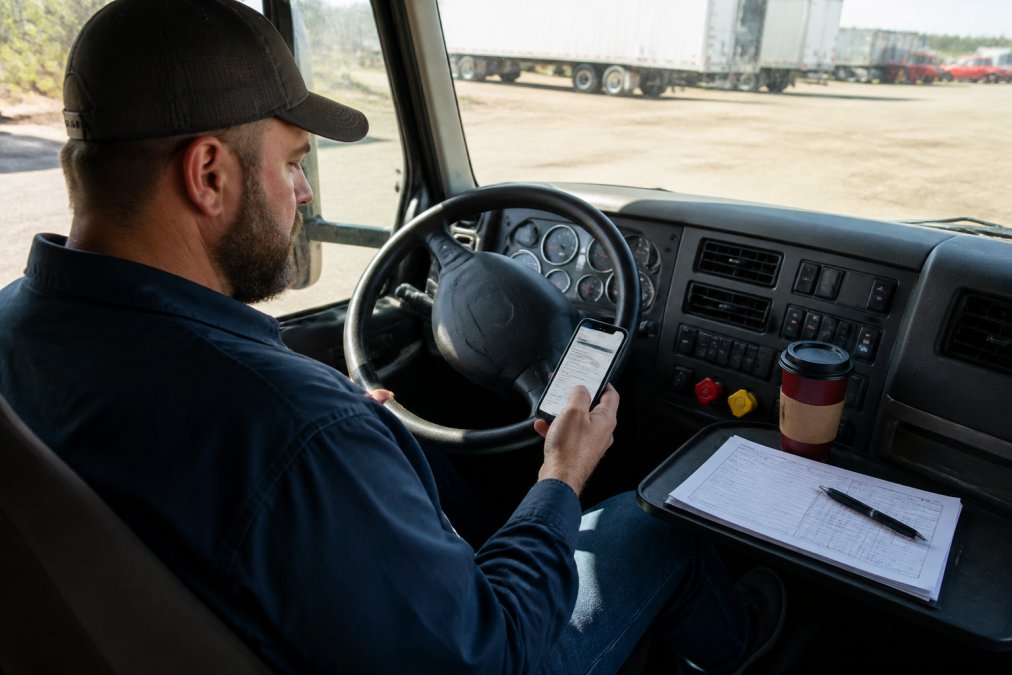
Here’s how it works in practice:
- Confirm your SAP has cleared you for the return-to-duty step.
- Engage a C/TPA that is registered to report to the FMCSA Clearinghouse.
- Provide your SAP documentation so the order can be tied to your record.
- Receive your testing authorization and locate a DOT-qualified collection site.
- Complete the test and confirm the verified negative result is reported.
Pro Tip
Ask any C/TPA two questions before you pay: Are you registered to report directly to the FMCSA Clearinghouse, and will you show me confirmation that my result was reported? A provider that can’t answer both clearly is a provider that can leave you stuck.
Ask any C/TPA two questions before you pay: Are you registered to report directly to the FMCSA Clearinghouse, and will you show me confirmation that my result was reported? A provider that can’t answer both clearly is a provider that can leave you stuck.
Observed Drug Test Requirements FMCSA Drivers Must Follow
An observed collection is mandatory for return-to-duty and follow-up testing under federal rules. It’s not optional, and no collection site can waive it for you.
What this means for scheduling:
- Not every collection site performs observed collections, so confirm before you drive there.
- The site must follow chain-of-custody procedures exactly, or the specimen can be rejected.
- A Medical Review Officer reviews the result before it’s reported as verified.
The Cost of a Return to Duty Drug Test and What Drives It
Most guides wave at cost without putting a number on the page. That’s a problem, because the return-to-duty process isn’t one expense, it’s four or five separate ones that hit at different points, and drivers who don’t plan for the full stack get blindsided halfway through.
| Stage | What You’re Paying For | Typical Range |
|---|---|---|
| SAP evaluation | Initial face-to-face assessment by a qualified Substance Abuse Professional | Varies widely by provider; often the largest single line item |
| Education or treatment | The program the SAP recommends (may be a short education course or a fuller treatment plan) | Depends entirely on the SAP’s recommendation |
| Return-to-duty test | Collection site fee plus lab analysis for a DOT panel | Modest, but varies by site |
| Observed collection | Same-gender observer and federal protocol handling | Adds to the collection site fee |
| C/TPA services | Order authorization, chain-of-custody coordination, Clearinghouse reporting | Bundled or itemized depending on provider |
| Follow-up testing | A separate, ongoing cost spread across the follow-up plan window | Recurring, not one-time |
Two things matter more than the numbers themselves.
Why You Shouldn’t Shop on Price Alone
The temptation is to find the cheapest collection site and C/TPA and call it done. That math usually backfires.
Pro Tip
Before you commit to any provider, ask for an itemized quote that separates the SAP fee, the collection and lab fee, the observed-collection surcharge, and the C/TPA reporting fee. A provider that can’t break those out is a provider whose total you can’t plan for.
Before you commit to any provider, ask for an itemized quote that separates the SAP fee, the collection and lab fee, the observed-collection surcharge, and the C/TPA reporting fee. A provider that can’t break those out is a provider whose total you can’t plan for.
How to Budget Without Guessing
Because the SAP and treatment portions are recommendation-driven, price the fixed pieces first and treat the variable pieces as a range:
- Fixed-ish: the return-to-duty test, the observed-collection surcharge, and the C/TPA reporting fee. These are quotable up front.
- Variable: the SAP evaluation and whatever program the SAP requires. Get the SAP’s recommendation in writing before you assume a total.
- Recurring: follow-up testing across the plan window.
Key Takeaway
The cheapest test is not the goal. A test that isn’t ordered correctly, observed properly, and reported to the Clearinghouse is a wasted expense no matter how little you paid for it, and you’ll pay again to fix it.
The cheapest test is not the goal. A test that isn’t ordered correctly, observed properly, and reported to the Clearinghouse is a wasted expense no matter how little you paid for it, and you’ll pay again to fix it.
What Happens After Your Test: Clearinghouse Reporting Timeline
Once your specimen is collected and the Medical Review Officer issues a verified negative result, it must be reported to the FMCSA Clearinghouse. The reporting changes your status, not the collection, and not the lab result sitting in a file.
- Collection completed at a DOT-qualified site, under observed-collection protocol, with a complete chain of custody.
- Laboratory analysis of the specimen at a certified lab.
- MRO review to confirm the result as verified negative. The MRO is the only party who can report a verified result, the collection site cannot.
- Reporting to the Clearinghouse by the employer or the C/TPA acting on the employer’s behalf.
- Status update reflecting your return-to-duty eligibility.
Who Is Actually Required to Report, and What Happens If They Won’t
This trips up drivers more than anything else, so let’s be direct about the division of duty.
- Your former employer has gone quiet. They have no incentive to help you, and they may not respond at all.
- A prospective employer refuses to initiate the test for a new hire. Some employers won’t touch a driver in prohibited status until the status is cleared, which is a catch-22, because clearing it requires an employer-authorized order.
Watch Out
A prospective employer’s refusal to initiate your test does not mean you’re barred from returning to duty. It means you need a C/TPA that can supply the employer-side authority the Clearinghouse requires. Don’t let a refusal stall you for weeks while you wait on someone who isn’t going to act.
A prospective employer’s refusal to initiate your test does not mean you’re barred from returning to duty. It means you need a C/TPA that can supply the employer-side authority the Clearinghouse requires. Don’t let a refusal stall you for weeks while you wait on someone who isn’t going to act.
How Long the Reporting Actually Takes
No article can promise a specific number of days, the timeline depends on lab turnaround, MRO review workload, and how quickly the reporting party enters the result. What you can control is the reporting party.
- Will you confirm in writing that my verified negative result was reported to the Clearinghouse?
- What’s your process if the report doesn’t appear on my record within a reasonable window?
Key Takeaway
Your status changes when the verified negative result is reported, not when you finish the test. The reporting party is the variable you can actually control, so choose one that confirms submission.
Your status changes when the verified negative result is reported, not when you finish the test. The reporting party is the variable you can actually control, so choose one that confirms submission.
Common Mistakes That Delay Your Return to Driving
Most delays trace back to a handful of avoidable errors. After watching drivers stuck for weeks on preventable problems, the pattern is clear.
- Ordering a test yourself. If you’re wondering “can i order my own rtd test,” the answer is no, it won’t be accepted, and the money is gone.
- Testing before the SAP clears you. The test is invalid if the prior steps aren’t complete.
- Using a site that doesn’t do observed collections. The test won’t meet federal requirements.
- Assuming a completed test equals a cleared status. Reporting to the Clearinghouse is a separate step.
- Letting a former employer sit on your paperwork. If they won’t act, you need a C/TPA.
Frequently Asked Questions
Can I order my own RTD test if I am currently unemployed?
You cannot place the order yourself, but you do not need a current employer to get tested. A DOT-qualified C/TPA can act as the ordering authority on your behalf, register the test in the Clearinghouse, and report the result. This is the route most unemployed drivers use, because it satisfies the federal requirement that a return-to-duty test be authorized and reported by a regulated party rather than the driver.
How much does a return to duty drug test cost?
The cost of a return to duty drug test varies by collection site, location, and whether alcohol testing is included. Expect the total to cover the collection fee, lab analysis, and Clearinghouse reporting. Rural areas and after-hours appointments usually cost more. RTDStep5 publishes its current pricing on its website, so you can see the full figure before you commit rather than discovering fees later.
What are the observed drug test requirements FMCSA drivers must follow?
Return-to-duty and follow-up drug tests must be observed, which means a same-gender collector watches the specimen leave your body. The collector documents the observation on the federal custody and control form. Skipping the observation or using a non-compliant site invalidates the test. Confirm before your appointment that the collection site handles observed collections and is set up for DOT work.
How do I know my RTD test result was reported to the Clearinghouse?
Ask the ordering party, whether that is your employer or a C/TPA, for confirmation that the verified negative result was submitted. You can also log into your own Clearinghouse account and check your status. A verified negative result from a return-to-duty test moves you out of prohibited status, but only if the report actually reaches the system, so get written confirmation rather than assuming it went through.
Being stuck in prohibited status is frustrating, and the rules around who can order your test make it worse. RTDStep5 exists to remove that specific bottleneck: as an FMCSA-registered C/TPA with access to more than 24,000 testing sites nationwide, we handle the Step 5 order, the DOT-compliant collection, and the Clearinghouse reporting so your verified negative result actually clears your record. Get started with RTDStep5 and take the final step toward getting back on the road.