 Call us now:

Table of Contents
- You Need a Return-to-Duty Test: Here Is the Exact Next Step
- What You’ll Need Before You Can Schedule Your DOT Return-to-Duty Test
- Step 1: Confirm Your SAP Return-to-Duty Process Timeline Is Complete
- Step 2: Choose Who Orders Your Test: Employer vs. Third-Party Administrator
- Step 3: How to Find a DOT-Compliant Testing Site Near You
- Step 4: What to Expect at the Collection Site and Common Mistakes to Avoid
- Step 5: Clearinghouse Prohibited Status Removal and Verification
- The Real Cost of Scheduling Your Return-to-Duty Test
- Frequently Asked Questions
Last Updated: September 7, 2026
You Need a Return-to-Duty Test: Here Is the Exact Next Step
A return to duty test is the mandatory drug and alcohol test you must pass before the FMCSA allows you back into any safety-sensitive position after a violation. If you are a CDL driver sitting in “prohibited” status, this test is the single barrier between you and your career. At RTDStep5, we coordinate these tests, and the most common reason drivers stay sidelined is confusion about the scheduling process.
You cannot simply walk into any clinic and request this test. Federal rules dictate who orders it, where it happens, and how results are reported. Below, we break down the exact sequence to schedule your DOT return to duty test, clear your Clearinghouse record, and get back behind the wheel without costly delays.
The entire process hinges on one regulatory framework. The Federal Motor Carrier Safety Administration’s Part 40 rules define every step, from the Substance Abuse Professional evaluation to the final laboratory result. Understanding this framework before you pick up the phone will save you weeks of frustration.
What You’ll Need Before You Can Schedule Your DOT Return-to-Duty Test
Before you contact anyone about testing, you must verify that you have completed the clinical side of your rehabilitation. The return to duty process timeline is non-negotiable: you cannot schedule a test until your Substance Abuse Professional (SAP) has formally discharged you from their program (fmcsa.dot.gov).
Your SAP is the licensed professional who evaluated you after your violation and prescribed your education or treatment. They are the gatekeeper for this entire process. You need a signed, dated release from your SAP confirming you have completed their prescribed plan. Without this document, no compliant testing facility will process your sample.
Gather these four items before you schedule anything:
- Your SAP discharge or completion letter
- Your CDL license and social security number
- Your FMCSA Clearinghouse login credentials
- The name and contact information of your employer or prospective employer
This preparation matters because the testing window is strict. Once your SAP releases you, you must complete the test promptly. Delays in gathering paperwork only extend the time you spend in prohibited status.
Step 1: Confirm Your SAP Return-to-Duty Process Timeline Is Complete
The SAP return to duty process timeline follows a fixed sequence. Your SAP evaluation, education, and follow-up assessment must all be finished before a single test can be ordered. If your SAP has not issued a final report, your test order will be rejected.
Here is what the completed timeline looks like:
- Initial evaluation with a qualified Substance Abuse Professional
- Prescribed education or treatment program completed in full
- Follow-up assessment where the SAP determines your progress
- SAP issues a formal release recommending you for testing
The critical error drivers make here is assuming their counselor or treatment center can order the test. They cannot. Only your SAP has the authority to recommend you for a return to duty test, and only an employer or a registered consortium can actually place the order with a collection site.
Watch Out
Do not pay for a return to duty test before your SAP has issued their formal release. Testing facilities will collect your sample, but if the SAP report is missing, the result cannot be processed and you will have wasted both money and time.
Do not pay for a return to duty test before your SAP has issued their formal release. Testing facilities will collect your sample, but if the SAP report is missing, the result cannot be processed and you will have wasted both money and time.
Step 2: Choose Who Orders Your Test: Employer vs. Third-Party Administrator
A return to duty test cannot be self-ordered. The FMCSA requires that an employer or a designated Third-Party Administrator (C/TPA) initiate the testing process. This is where many unemployed drivers hit a wall.
If you are currently employed, your employer’s designated official typically coordinates the test order and the collection site. They will also receive the results and handle the Clearinghouse reporting. This is the smoothest path, but it depends on your employer being responsive.
If you are unemployed, an owner-operator, or your former employer is unresponsive, a registered C/TPA solves the problem. These administrators are authorized to order tests on behalf of drivers who lack an employer sponsor. RTDStep5 operates as an FMCSA-registered C/TPA, which means we can initiate your test order without requiring you to have a company backing you.
The choice matters because it determines your testing window and your reporting chain. An employer may take days or weeks to process paperwork. A dedicated C/TPA focuses exclusively on moving you through the compliance pipeline quickly.
Step 3: How to Find a DOT-Compliant Testing Site Near You
Not every clinic that performs drug tests is authorized to handle DOT return to duty testing. The collection site must follow strict chain of custody procedures outlined in Part 40, and the laboratory must be certified by the Department of Health and Human Services. Using a non-compliant site invalidates your test.
The FMCSA maintains a list of certified laboratories, but finding a compliant collection site near you requires more legwork. Most drivers search for local occupational health clinics or urgent care centers that advertise DOT testing services. The key question to ask before booking is whether they handle federally mandated testing with proper custody and control forms.
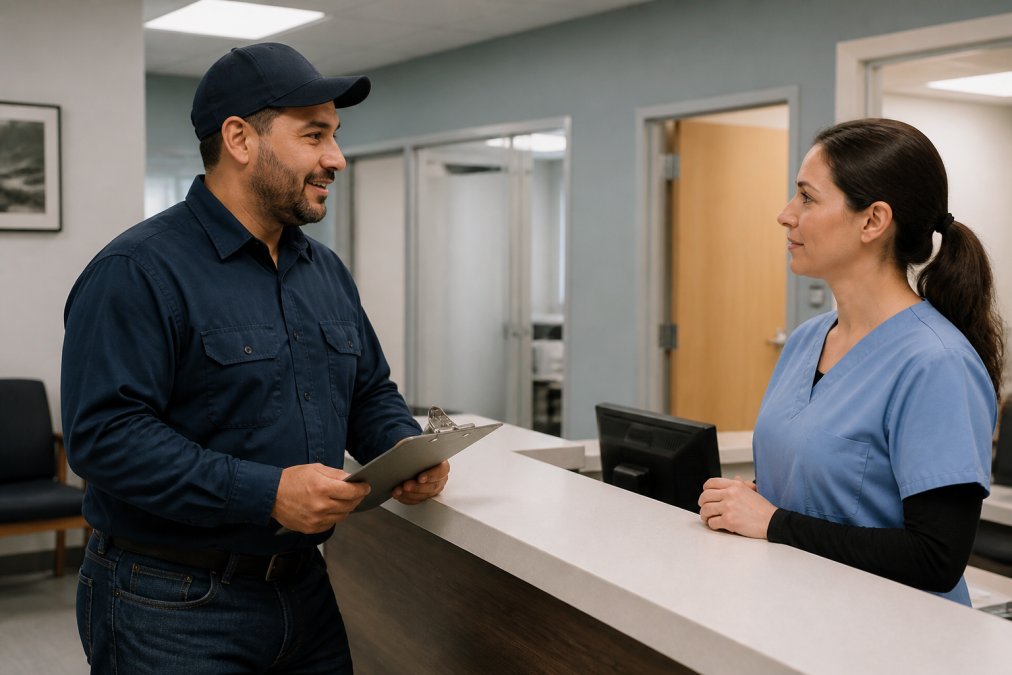
A nationwide network solves the rural access problem. RTDStep5 coordinates with more than 24,000 testing sites across the country, which means we can locate a compliant collection facility within a reasonable distance of almost any location.
Pro Tip
Call the collection site before you drive there and ask two questions: “Do you handle FMCSA Part 40 testing?” and “Do you use federal custody and control forms?” If the receptionist hesitates on either, find another site.
Call the collection site before you drive there and ask two questions: “Do you handle FMCSA Part 40 testing?” and “Do you use federal custody and control forms?” If the receptionist hesitates on either, find another site.
Step 4: What to Expect at the Collection Site and Common Mistakes to Avoid
Your DOT return to duty test will be a directly observed urine collection. This is not a standard pre-employment screening. Part 40 regulations require that a same-gender observer physically watches the specimen leave your body to prevent adulteration or substitution.
The process is straightforward but clinical. You will check in, present identification, and complete the chain of custody form. A collector of the same gender will accompany you to the restroom and observe the void. The specimen is then split into two bottles, sealed, and documented. The entire visit typically takes less than an hour.
Common mistakes that invalidate tests include:
- Failing to bring proper identification
- Drinking excessive fluids beforehand, which can dilute the sample
- Taking over-the-counter medications that trigger a false positive
- Not disclosing legitimate prescriptions to the Medical Review Officer
If your sample comes back diluted or invalid, you will need to retest immediately. This adds days to your timeline and delays your Clearinghouse status update.
Step 5: Clearinghouse Prohibited Status Removal and Verification
The FMCSA Clearinghouse is the electronic database that tracks drug and alcohol violations for commercial drivers. Your prohibited status remains active until the negative test result is reported and processed. The return to duty test itself does not clear your record; the reporting step does. This section covers the standard process, but more importantly, it outlines what to do when things go wrong, because a non-negative result or an administrative error can derail your reinstatement.
The Standard Reporting Chain
Once your specimen is collected, the laboratory analyzes it and sends the result to the Medical Review Officer (MRO). The MRO verifies the result and communicates it to the employer or C/TPA who ordered the test. That entity then reports the negative result to the Clearinghouse, which triggers the removal of your prohibited status. This chain can take several days. Drivers often assume that passing the test on Monday means they can drive on Tuesday. In practice, you must wait until the Clearinghouse status update is complete. You can verify your status by logging into the FMCSA Clearinghouse portal and checking your driver profile.
What Happens If Your Test Is Not Negative?
A “non-negative” result (a positive test for a prohibited substance, an adulterated specimen, or a substituted specimen) does not simply mean you stay in prohibited status, it triggers a whole new cycle of consequences. The MRO will report the non-negative result to the Clearinghouse, and your status will be updated to reflect the new violation. This means you will be required to go back to the beginning of the SAP process: a new evaluation, a new prescribed education or treatment program, and a new follow-up assessment before you can be recommended for another return to duty test. This is a costly and time-consuming setback, so it is critical to be certain you are clean before you provide a sample.
What If Your Test Is Diluted or Invalid?
A diluted or invalid result is not a positive, but it is also not a negative. If your sample is flagged as diluted, the MRO will typically require you to retest immediately under direct observation. This adds days to your timeline and delays your Clearinghouse status update. To avoid this, do not overhydrate before your test. The standard advice is to drink a moderate amount of water, but drinking excessive fluids to ‘help’ produce a sample is a common mistake that leads to a diluted result and a retest.
How to Handle Administrative Delays and Errors
The most frustrating delays are not caused by the test itself but by paperwork errors. A missing signature on the custody and control form, an incorrect driver’s license number, or a failure by the employer to report the result to the Clearinghouse can all stall your reinstatement. If your test was negative but your Clearinghouse status has not updated within five business days, take these steps:
- Contact the C/TPA or employer who ordered the test. Ask them to confirm that the negative result was reported to the Clearinghouse. They are the party responsible for the electronic submission.
- Request a copy of the chain of custody form. This document proves your sample was collected and processed. If there was an error, it will be documented here.
- File a Data Q&A request through the Clearinghouse portal. If the result was reported but your status is still incorrect, you can submit a Data Q&A request to the FMCSA to investigate and correct the error. This is a formal process, but it is the mechanism designed for resolving these disputes.
Key Takeaway
The return to duty test is not complete until the negative result appears in the Clearinghouse. Always verify your status change electronically before accepting any driving assignment, because carriers will check your record before putting you behind the wheel. If you encounter an error, do not panic, use the Data Q&A process to get it fixed.
The return to duty test is not complete until the negative result appears in the Clearinghouse. Always verify your status change electronically before accepting any driving assignment, because carriers will check your record before putting you behind the wheel. If you encounter an error, do not panic, use the Data Q&A process to get it fixed.
The Appeal and Dispute Resolution Process
If you believe a test result is incorrect, for example, if you have a legitimate prescription that was not properly reviewed by the MRO, you have the right to challenge it. The first step is to contact the MRO who verified the result. The MRO is required to give you the opportunity to discuss a confirmed positive result and to provide proof of a valid prescription. If the MRO upholds the result and you still dispute it, you can request a review of the split specimen. The split specimen is the second bottle collected during your test. It is stored at the laboratory and can be sent to a second HHS-certified lab for independent analysis. If the split specimen test comes back negative, the original result is overturned. This is a rare outcome, but it is a critical safeguard for drivers who believe they have been wrongly flagged.
The Real Cost of Scheduling Your Return-to-Duty Test
The cost of a return to duty test is rarely a single line item, and most drivers are blindsided by the total. The final bill is a combination of clinical fees, laboratory analysis, administrative processing, and the opportunity cost of every day you remain in prohibited status. Here is the realistic financial breakdown you should expect.
The Three Core Fees You Will Pay
1. The SAP Evaluation and Education Program (The Biggest Variable)
This is the most expensive and least predictable part of the process. The Substance Abuse Professional (SAP) charges a fee for the initial assessment, which typically ranges from $150 to $400 depending on your location and the provider’s credentials. However, the SAP does not just evaluate you; they prescribe a specific education or treatment program. The cost of that program is entirely separate and can range from a few hundred dollars for a basic online education course to several thousand dollars for intensive outpatient treatment. You must complete this program before you can even schedule the return to duty test. This is a non-negotiable prerequisite, and you should ask your SAP for a written cost estimate for both the evaluation and the prescribed program before you commit.
2. The Collection Site and Laboratory Fee
This is the fee for the physical test itself. The collection site (the clinic or urgent care center) charges a fee for the directly observed collection, which typically runs between $50 and $150. The laboratory then charges a separate fee for the actual analysis of the specimen, which is usually another $50 to $100. When you book your appointment, ask for a bundled price that includes both the collection and the lab analysis. Some facilities will quote a single “DOT test” price that covers both, while others will itemize them. Clarify this upfront to avoid a surprise second bill.
3. The C/TPA Administrative Fee
If you are using a Third-Party Administrator (C/TPA) to order your test because you are unemployed or your employer is unresponsive, you will pay an administrative fee. This fee covers the C/TPA’s work in placing the test order, managing the chain of custody paperwork, and reporting the negative result to the FMCSA Clearinghouse. This fee is typically a flat rate between $50 and $150. While it may seem like an unnecessary expense, it is often the fastest way to get back on the road, as it removes the bottleneck of waiting for a slow employer HR department.
The Hidden Cost: Your Time Out of Service
The most significant cost is not the fees themselves; it is the lost income. Every single day you wait to schedule your test is a day you cannot legally drive. A delay caused by waiting for an employer to process paperwork can cost you thousands of dollars in lost wages. When comparing your options, calculate the total cost of the administrative fee against the cost of waiting. Paying a C/TPA fee to get your test scheduled quickly is often a better financial decision than waiting for an employer-sponsored test.
How to Avoid Overpaying
- Ask for a bundled quote: When you call a collection site, ask for the total out-of-pocket cost for a DOT return to duty test, including the collection and lab fees. Do not accept a quote that only covers the collection.
- Confirm the SAP’s full scope: Before you pay for the SAP evaluation, ask if the quoted fee includes the follow-up evaluation or if that is an additional charge. Many SAPs charge separately for the initial assessment and the final follow-up.
- Beware of ‘Clearinghouse Cleanup’ scams: No legitimate service can clear your Clearinghouse record without a negative test result. Any provider that promises to ‘remove’ or ‘expunge’ your violation for a fee is fraudulent. The only path to a clean status is a verified negative return to duty test.
Watch Out
Do not pay for a return to duty test before your SAP has issued their formal release. Testing facilities will collect your sample, but if the SAP report is missing, the result cannot be processed and you will have wasted both money and time.
Do not pay for a return to duty test before your SAP has issued their formal release. Testing facilities will collect your sample, but if the SAP report is missing, the result cannot be processed and you will have wasted both money and time.
For a transparent breakdown of current fees for the test ordering and Clearinghouse reporting services, check the pricing page on the RTDStep5 website. The SAP evaluation and education costs are separate and are negotiated directly with your Substance Abuse Professional.
Frequently Asked Questions
How long is the return-to-duty process for a drug test?
The SAP return-to-duty process timeline has no fixed calendar length. It depends on how quickly you complete your initial SAP evaluation, the prescribed education or treatment, and the follow-up evaluation. Once your SAP releases you, the return-to-duty test itself is typically scheduled within a few business days. After the test, your negative result must be reported to the Clearinghouse, which usually happens within 24 to 48 hours of the lab completing its analysis.
Can I schedule my own return-to-duty test or does my employer do it?
You can schedule your own return-to-duty test if you do not have an employer. A DOT-compliant test requires a designated employer representative (DER) or a registered C/TPA to place the order. If you are unemployed or an owner-operator, a third-party administrator like RTDStep5 acts in that capacity, orders the test from a certified collection site, and manages the required Clearinghouse reporting for you.
What documents do I need to bring to my return-to-duty testing appointment?
Bring a valid government-issued photo ID, such as a driver’s license or passport. You also need your social security number for the chain of custody form. Do not bring your FMCSA Clearinghouse login, as the collection site does not need it. The C/TPA or employer that ordered your test handles the electronic reporting through the Clearinghouse system after the lab releases your negative result.
Is a return-to-duty test different from a standard pre-employment drug test?
Yes. A return-to-duty test is a directly observed urine collection, which is stricter than a standard pre-employment test. The observer watches the specimen leave your body to prevent tampering. The test is also ordered under Part 40 compliance rules specific to your SAP return-to-duty process timeline. A negative result is mandatory before you can perform any safety-sensitive functions, and your employer must verify your Clearinghouse status is active before you start driving.