 Call us now:


Table of Contents
- Why Finding RTD Testing Sites in Rural Areas Is Challenging
- Step 1: Understand Your DOT Return-to-Duty Test Requirements
- Step 2: Search for DOT Return-to-Duty Test Locations Near You
- Step 3: Schedule Your DOT Return-to-Duty Test
- Step 4: Complete Your Return-to-Duty Test Without an Employer
- What to Do When No Nearby Collection Site Is Available
- Verifying Your Test Results Were Reported to the FMCSA Clearinghouse
- Frequently Asked Questions
Last Updated: October 15, 2026
Why Finding RTD Testing Sites in Rural Areas Is Challenging
Finding RTD testing sites in rural areas presents obstacles urban drivers rarely face. The nationwide network of collection sites clusters around population centers, so rural areas often have limited options within reasonable driving distance.
You’ve completed your SAP evaluation and are ready for your final step, but the nearest certified collection site might be 50 miles away or more.
At RTDStep5, we work with drivers facing exactly this situation. The challenge isn’t just distance, it’s confirming the site actually handles DOT return-to-duty testing.
A systematic approach solves this: locate a compliant site, confirm its capabilities, and schedule your test, even in sparse rural areas.
Step 1: Understand Your DOT Return-to-Duty Test Requirements
Your return-to-duty test is not optional. It’s the final step mandated by the Federal Motor Carrier Safety Administration (FMCSA) after a drug or alcohol violation.
What makes this test different:
Your test must be DOT-compliant: the collection site must be registered with the FMCSA and follow strict chain-of-custody procedures.
The test itself is straightforward: you provide a urine sample, the lab analyzes it, and results are reported to the FMCSA Clearinghouse.
But here’s what matters for rural drivers: not every collection site can perform DOT testing. Some facilities only handle workplace screening for employers. Others lack the FMCSA registration required for return-to-duty testing.
That’s why confirming DOT capability before you drive is essential. You need a site that:
- Holds FMCSA registration as a certified collection site
- Performs DOT return-to-duty tests specifically
- Reports results to the Clearinghouse automatically
- Can schedule you within a reasonable timeframe
Rural areas sometimes have only one or two options. Knowing what to look for prevents wasted trips.
Step 2: Search for DOT Return-to-Duty Test Locations Near You
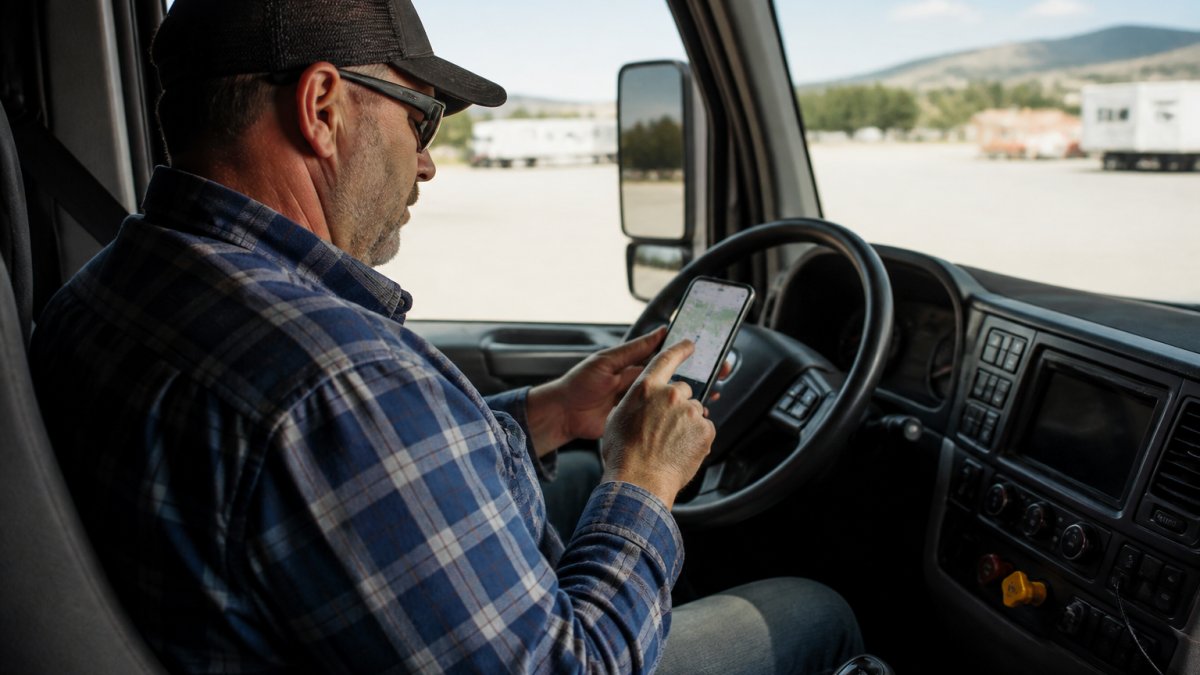
Start with a ZIP code search, but treat it as the beginning of a verification workflow, not the end. A “drug testing” listing does not mean the site can perform a DOT return-to-duty collection. Build a short list of authorized sites, then confirm each one before you commit to a drive.
Run the search in widening rings
Most national collection networks let you enter a ZIP code and choose a radius. Work outward in rings so you do not miss a closer option:
- Search a 25-mile radius first.
- If you get fewer than two usable results, expand to 50 miles.
- If results are still thin, expand to 75 miles, then 100 miles.
- At each ring, write down the facility name, address, phone number, and hours.
Rural ZIP codes routinely return one or two options inside 50 miles, and sometimes none. Keep the ring-by-ring list to compare travel time against appointment availability.
Search by the ZIP code where you will actually be, not your home ZIP. If you drive a regular route, a site near a delivery stop may be closer in practice than one near your house.
Confirm the site can perform a DOT return-to-duty test
This is the step most drivers skip, and it causes failed trips. A collection site can be legitimate and still be wrong for your test. Before you drive anywhere, call and confirm four things:
- DOT collection capability. Ask directly: “Are you set up to perform a DOT urine collection under 49 CFR Part 40?” A site that only does non-DOT workplace screening will say so.
- Return-to-duty authorization. A return-to-duty test is a specific test reason, not a routine pre-employment or random test. Ask: “Can you collect a return-to-duty test ordered through the Clearinghouse?” Some sites collect DOT tests but are not set up to handle the RTD test reason.
- Clearinghouse reporting path. In the DOT process, the lab reports the result to the Medical Review Officer (MRO), who reports the verified result to the Clearinghouse. The collection site starts the chain of custody; it does not clear your status. Confirm the site ships specimens to a DOT-certified lab and that the paperwork carries the correct test reason.
- Scheduling and hours. Ask how soon they can take you, whether they take walk-ins, and what their cutoff time is for same-day collections.
Listen for confident, specific answers. Hesitation, or an answer like “any drug test is the same,” is a signal to keep looking.
Do not assume a site is DOT-ready because it appears in a national directory. Directories list collection capability, not return-to-duty authorization. The phone call is what separates a usable site from a wasted trip.
Verify before you book, not after you arrive
A short verification checklist keeps a rural trip from turning into a wasted day:
- Site confirms DOT collection under Part 40.
- Site confirms it can handle the return-to-duty test reason.
- Site confirms the specimen goes to a DOT-certified lab.
- Site confirms the result path runs through an MRO to the Clearinghouse.
- Site confirms hours, appointment lead time, and what ID or paperwork to bring.
If any answer is unclear, move to the next site on your ring list. A wrong collection can mean a rejected specimen and a repeat trip.
FMCSA Clearinghouse driver resources
Step 3: Schedule Your DOT Return-to-Duty Test
Once you’ve confirmed a site’s DOT capability, schedule your test. Most facilities require advance notice, and rural sites especially may have limited availability.
When you call to book your appointment:
- Provide your name and contact information
- Confirm the date and time that works for you
- Ask if you need to bring identification or paperwork
- Confirm the cost and payment method accepted
- Get a confirmation number
Arrive 10 minutes early with valid identification. The collection takes 15-30 minutes.
Some rural drivers coordinate with their employer or C/TPA (Consortium/Third Party Administrator), who may handle scheduling. Confirm who’s responsible before your appointment. If you’re testing without an employer, you’re responsible for scheduling and payment.
Step 4: Complete Your Return-to-Duty Test Without an Employer
Many drivers are ready for their return-to-duty test but don’t have an employer ordering it. This is allowed, you can schedule and complete your RTD test independently.
Here’s what changes:
You pay for the test yourself. Without an employer sponsoring it, you cover the cost, which varies by facility and location.
You’re responsible for scheduling. You make the calls and book the appointment.
You authorize the test. At the collection site, you’ll sign consent forms authorizing the test and result reporting to the FMCSA Clearinghouse.
Results go directly to the Clearinghouse. The lab reports your result; you don’t submit it yourself.
The procedure is identical whether you’re employed or independent: you provide a urine sample, the site follows DOT chain-of-custody rules, and results are reported within 24-48 hours. Many independent and owner-operator drivers handle this step alone.
What to Do When No Nearby Collection Site Is Available
Sometimes the ring search comes back empty even at 100 miles. Don’t just keep widening the radius, work an escalation sequence and document each step, because a documented scheduling constraint supports a request for an alternate arrangement.
Escalation sequence
1. Contact the party that ordered your test. In most return-to-duty situations, your employer or a Consortium/Third Party Administrator (C/TPA) orders the test and selects or approves the collection site.
**2.
3. Involve your SAP if you are stuck. Your Substance Abuse Professional knows the return-to-duty process and may know of collection resources in your region.
4. Document the constraint. Keep a simple log: dates you searched, ZIP codes and radii you tried, sites you called, and what each site said.
5. Coordinate travel with a planned trip. If you already travel to a larger town for supplies, medical care, or work, schedule the collection during that trip.
When no local site exists, the fix is usually coordination, not more driving. The employer or C/TPA that ordered the test is the first call, because they control site selection and authorization.
Know who does what
Rural drivers often get stuck because no one explains the chain of responsibility. The typical split:
- Employer or C/TPA: orders the test, selects or approves the collection site, and receives the result.
- Collection site: performs the collection under DOT chain-of-custody procedures and ships the specimen to a certified laboratory.
- Laboratory: tests the specimen and reports the result to the Medical Review Officer.
- MRO: reviews, verifies, and reports the result to the FMCSA Clearinghouse.
- You (the driver): appear with valid ID, sign the consent and custody paperwork, and later verify your Clearinghouse record.
If you are testing without an employer, you take on the ordering role: you schedule the collection, authorize reporting to the Clearinghouse, and pay for the test.
Confirm cost and payment responsibility before you book
Costs vary by site and region, and rural sites may charge differently than urban ones. Before a long drive, ask:
- What is the collection fee, and is it separate from the laboratory fee?
- Is there a separate MRO review fee?
- Does the ordering party (employer or C/TPA) cover the cost, or are you paying directly?
- What payment methods does the site accept?
Get the answer in writing if you can. If your employer or C/TPA is paying, confirm the site will bill them rather than collecting payment from you at the counter.
Do not pay out of pocket for an employer-ordered test without confirming who is responsible. Reimbursement is not guaranteed, and payment responsibility is set by the ordering party, not the collection site.
Reduce the chance of a failed trip
A long drive to a collection site is an investment. Protect it:
- Confirm the appointment the day before.
- Check the site’s hours and any holiday closures.
- Check weather and road conditions on your route.
- Identify a backup site in case the first one is closed or cannot collect.
- Bring valid government-issued photo ID and any requested paperwork.
A two-hour drive to a confirmed site expecting you beats a shorter drive to an unverified location that turns you away.
Verifying Your Test Results Were Reported to the FMCSA Clearinghouse
After your test, confirm the result reached the FMCSA Clearinghouse. This final step matters: a negative result only clears your prohibited status once it’s recorded there.
Check your Clearinghouse record 2-3 days after your test. Log into your driver portal. Look for your test result and current status.
If the site confirms submission, contact the FMCSA Clearinghouse directly with your test date and facility name to verify the result was received and processed.
A negative return-to-duty test clears your prohibited status immediately once recorded, and you can then apply to drive safety-sensitive positions again.
Getting back on the road after a violation requires completing your return-to-duty test correctly.
RTDStep5 simplifies this final step.
Frequently Asked Questions
How do I find a DOT return-to-duty testing site near me if I live in a rural area?
Start by entering your ZIP code into a nationwide testing-site directory or contact a C/TPA like RTDStep5 that has access to over 24,000 collection sites. Call ahead to confirm the site is DOT-certified and can perform return-to-duty tests. If no site is within reasonable driving distance, ask your C/TPA about mobile testing options or sites in the nearest town. Having a backup location planned before you call prevents wasted travel time.
Can I complete a return-to-duty test without an employer?
Yes. If you’re unemployed or an owner-operator, you can arrange your RTD test through a C/TPA (Consortium/Third-Party Administrator) without an employer placing the order. The C/TPA coordinates the test, collects your sample, and reports results to the FMCSA Clearinghouse. You may be responsible for the test cost, which varies depending on the testing type and location. Contact your C/TPA to confirm payment responsibility before scheduling.
How do I confirm a rural testing site can perform a DOT return-to-duty test?
Call the collection site directly and ask if they are certified to perform DOT return-to-duty testing and if they can report results to the FMCSA Clearinghouse. Ask for their FMCSA registration number or C/TPA affiliation to verify legitimacy. Confirm they have availability within your needed timeframe. Not all testing sites perform RTD tests, so this call is essential to avoid a wasted trip.
How is my completed RTD test reported to the FMCSA Clearinghouse?
After you complete your test at the collection site, the Medical Review Officer (MRO) reviews your results. If the test is negative, the MRO reports the result to the FMCSA Clearinghouse within 1-2 business days. Your C/TPA coordinates this reporting. You can verify your clearance status by logging into the Clearinghouse portal with your CDL number. If reporting is delayed, contact your C/TPA to confirm the status.