 Call us now:


Last Updated: November 1, 2026
Quick Summary
Follow-up testing is the unannounced testing phase that begins after a driver completes the return-to-duty process and returns to safety-sensitive duty. Under 49 CFR 382.311, the SAP must require a minimum of six unannounced follow-up tests in the first 12 months, and the testing period can extend up to five years.
- The SAP writes the follow-up testing plan, and the employer must implement it exactly as written.
- Follow-up tests must be unannounced; a driver cannot schedule them in advance.
- The testing period runs at least 12 months and can extend up to five years.
- When a driver changes employers, the new employer must continue the plan as written.
- A missed test without a legitimate explanation can be treated as a refusal to test.
Table of Contents
- What Follow-Up Testing Is and Where It Fits in the Return-to-Duty Process
- The Substance Abuse Professional’s Role in the DOT Follow-Up Testing Plan
- Number of DOT Follow-Up Tests: The Minimum Six in the First 12 Months
- The DOT Follow-Up Testing Schedule: Unannounced Tests and the Five-Year Maximum
- How the FMCSA Return-to-Duty Process and Clearinghouse Reporting Connect
- Employer and Driver Responsibilities During the Testing Period
- Missed, Refused, or Positive Tests: What Happens Next
- Scheduling Your Step 5 Return-to-Duty Test with RTDStep5
- Frequently Asked Questions
What Follow-Up Testing Is and Where It Fits in the Return-to-Duty Process
FMCSA clearinghouse follow up testing requirements are the rules that govern the unannounced drug and alcohol tests a CDL driver must complete after a violation and a return-to-duty decision. Drivers often understand the return-to-duty test but not the long tail of follow-up tests that comes after it.
Follow-up testing is the unannounced testing phase that begins after a driver has completed the return-to-duty process and returned to safety-sensitive duty. It is not a one-time event. Under 49 CFR Part 382, Subpart G, a SAP-designed follow-up testing plan governs how often a driver is tested, for how long, and under what conditions.
The follow-up plan is written before a driver takes the return-to-duty test. The SAP builds it into the evaluation, and the employer must implement it exactly as written.
Follow-Up Testing vs. the Return-to-Duty Test
The return-to-duty test is a single, scheduled test that a driver must pass before resuming safety-sensitive functions. Follow-up testing is the ongoing, unannounced series that follows. One is a gate; the other is a period of monitoring.
Passing the return-to-duty test gets a driver back behind the wheel, but the follow-up testing plan is what keeps the driver eligible to stay there.
The Substance Abuse Professional’s Role in the DOT Follow-Up Testing Plan
A Substance Abuse Professional (SAP) is a qualified professional who evaluates a driver after a violation and determines what education, treatment, and testing the driver needs before returning to duty.
The SAP decides two things that matter most: the number of follow-up tests and the duration of the testing period.
The follow-up plan travels with the driver. For the full sequence after the evaluation that produces the plan, see our guide on what happens after SAP evaluation.
Number of DOT Follow-Up Tests: The Minimum Six in the First 12 Months
The number of DOT follow-up tests a driver must complete is set by the SAP, but the regulation sets a floor. Under 49 CFR 382.311, the SAP must require a minimum of six unannounced follow-up tests in the first 12 months following the driver’s return to duty.
That’s the minimum, not the ceiling. The SAP can require more. The exact number depends on the SAP’s clinical judgment, the nature of the violation, and the driver’s treatment history.
| Requirement | Regulatory Floor | Who Sets the Actual Number |
|---|---|---|
| Tests in first 12 months | Minimum of six | The SAP |
| Total testing period | At least 12 months | The SAP, up to the maximum |
| Maximum testing period | Up to five years | The SAP |
| Test scheduling | Unannounced | Employer, per the plan |
The practical takeaway: don’t assume six tests and you’re done. Read the SAP’s written plan and confirm the actual count before you plan your year.
The DOT Follow-Up Testing Schedule: Unannounced Tests and the Five-Year Maximum
The DOT follow-up testing schedule is built on one non-negotiable rule: follow-up tests must be unannounced. A driver cannot schedule them in advance, and an employer cannot warn a driver ahead of time.
The testing period runs at least 12 months and can extend up to five years. The SAP decides where in that range a driver lands. A driver with a more serious violation history or a longer treatment course may face a multi-year plan.
In practice, the employer must spread the required tests across the testing period and select testing dates at random. A driver who knows the tests are coming but not when is being tested the way the regulation intends.
How the FMCSA Return-to-Duty Process and Clearinghouse Reporting Connect
The FMCSA return-to-duty process and the Drug and Alcohol Clearinghouse are tied together at every stage.
For the full breakdown of how reporting works, see our explanation of the FMCSA Clearinghouse reporting process.
Watch out: a driver who completes the return-to-duty test but whose employer never reports it to the Clearinghouse stays prohibited. The test alone doesn’t clear the status.
Employer and Driver Responsibilities During the Testing Period
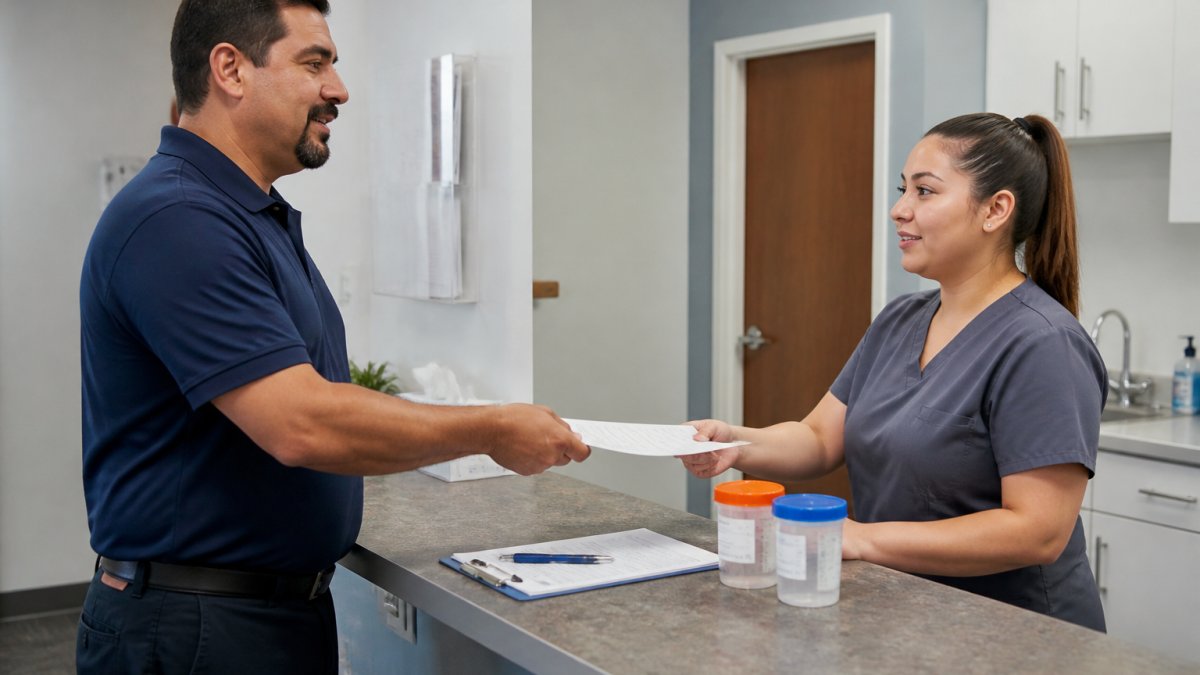
Employers and drivers each carry distinct obligations during the follow-up testing period. The regulation assigns the employer the duty to implement the SAP’s written plan exactly as written, and it assigns the driver the duty to appear for each test when directed.
What the Employer Must Do
Under 49 CFR 382.311, the employer must ensure that the follow-up testing plan is carried out. In practice that means the employer:
- Obtains the SAP’s written follow-up testing plan before the driver returns to safety-sensitive duty.
- Selects testing dates at random across the testing period, so the tests remain unannounced.
- Directs the driver to a collection site that meets the applicable DOT collection requirements.
A common pattern is for employers to calendar the required number of tests at the start of the plan and then select the actual dates at random within each window. That satisfies the unannounced requirement without leaving tests to chance at the end of the year.
How to Notify a Driver Without Compromising the Unannounced Test
The unannounced rule does not mean the driver gets no notice at all, it means the driver cannot know in advance when the test will occur. A workable notification sequence looks like this:
- The employer selects the test date at random.
- On the test date, the employer directs the driver to report to the collection site, typically with little or no advance warning.
- The driver reports to the site and completes the test.
- The employer documents the date, the site, and the result.
The failure mode to avoid is telling a driver “you have a test sometime this month”, that converts an unannounced test into a scheduled one and undermines the purpose of the plan.
What the Driver Must Do
- Keep contact information current with the employer so the driver can be reached when a test is directed.
- Report to the collection site when directed and complete the test.
- Keep a copy of the SAP’s follow-up testing plan, especially when changing jobs.
When a Driver Changes Employers
This is the handoff that trips up the most drivers. The follow-up testing plan belongs to the driver’s return-to-duty process, not to a single employer. When a driver moves to a new employer mid-plan:
- The driver should provide the new employer with a copy of the SAP’s follow-up testing plan.
- The new employer must continue the plan as written, including the remaining number of tests and the remaining testing period.
- The new employer should confirm the driver’s Clearinghouse status before permitting safety-sensitive duty.
A gap in that handoff, a new employer who never receives the plan, or a driver who assumes the plan ended with the old job, is one of the most common ways a driver ends up back in prohibited status.
Key Takeaway
Employers own the schedule and the records; drivers own showing up and keeping the plan moving across job changes. Neither side can complete the follow-up testing period alone.
Missed, Refused, or Positive Tests: What Happens Next
A missed, refused, or positive follow-up test is a new violation, not a minor slip. For concrete next steps on handling a failed follow-up test, see how to handle a failed return to duty test. But the three outcomes are not identical, and the next steps differ for the employer, the driver, and the SAP. Treating them as one event is where drivers lose time getting back to work.
Missed Test
A missed test occurs when the driver fails to appear for a test the employer directed. Under the DOT testing rules, a failure to appear without a legitimate explanation can be treated as a refusal to test. The practical consequence is the same as a refusal: the driver returns to prohibited status in the Clearinghouse, and the return-to-duty process restarts.
What to do next:
- Driver: contact the employer immediately and document the reason for the missed test. A documented legitimate absence may change how the employer reports the event, but it does not erase the obligation to test.
- Employer: evaluate whether the absence qualifies as a refusal under the applicable rules, report the event as required, and update the driver’s status.
- SAP: re-engage with the driver to determine whether a new evaluation and a new follow-up testing plan are required.
Refused Test
A refusal includes declining to take a test, leaving the collection site before the test is complete, or failing to cooperate with the collection process. A refusal is treated as a violation equivalent to a positive test result. The driver’s Clearinghouse status returns to prohibited, and the return-to-duty process begins again.
What to do next:
- Driver: do not attempt to resolve the refusal directly with the collection site. Contact the employer and, if needed, a SAP.
- Employer: report the refusal as required and remove the driver from safety-sensitive duty.
- SAP: conduct a new evaluation and issue a new return-to-duty plan, including a new follow-up testing plan.
Watch Out
Drivers sometimes skip a test because they cannot reach the collection site in time. Under the regulations, that can be treated as a refusal to test, and it carries the same weight as a positive result. If you cannot make a test, contact your employer immediately rather than letting the window close.
Scheduling Your Step 5 Return-to-Duty Test with RTDStep5
Scheduling the return-to-duty test can be where drivers stall. RTDStep5 provides a streamlined, compliant solution for completing that testing.
We support DOT-compliant Step 5 testing and include Clearinghouse reporting. If you’re ready to move, schedule your DOT return-to-duty test and we’ll take it from there.
For the broader picture of where follow-up testing fits in the full procedure, our return-to-duty testing procedure guide lays out every step.
Frequently Asked Questions
How many follow-up tests are required after a DOT return-to-duty test?
The Substance Abuse Professional must set a minimum of six unannounced follow-up tests during the first 12 months after the driver returns to safety-sensitive duty. That six-test floor is a regulatory minimum, not a ceiling. The SAP can require more, and the plan can run for up to five years. The exact number depends on the SAP’s clinical evaluation, the driver’s treatment history, and any prior violations, so two drivers with the same violation can end up with different plans.
How long does the FMCSA follow-up testing period last?
The testing period begins after the driver completes the return-to-duty process and returns to safety-sensitive functions. It runs for at least 12 months and can extend to a maximum of five years from the date of the violation, as set by the SAP. The SAP decides the length based on the evaluation and treatment recommendations. Drivers cannot shorten the period themselves, and employers cannot waive it. Only the SAP can adjust the plan, and any change should be documented in writing.
Who creates the DOT follow-up testing plan?
Only a qualified Substance Abuse Professional can create the DOT follow-up testing plan. The SAP writes the plan after the initial evaluation and updates it after the driver completes the education or treatment referral. The plan specifies the number of tests, the testing period, and any other conditions. Employers must follow the plan as written and cannot add, remove, or reschedule tests on their own. If a driver changes employers, the new employer must receive the plan and continue it without modification.
Are follow-up tests announced or unannounced?
Follow-up tests must be unannounced, meaning the driver cannot know in advance when a test will occur. The employer or its C/TPA schedules each test so the driver has no opportunity to prepare or delay. In practice, this means the driver is notified shortly before the collection, often the same day. Announced tests do not satisfy the requirement and can put the employer out of compliance. Drivers should expect to be available for testing throughout the entire testing period, including during normal work assignments.
Does a follow-up test need to be reported to the FMCSA Clearinghouse?
Yes. Follow-up test results are reported to the FMCSA Clearinghouse as part of the driver’s record. A positive result, a refusal to test, or an adulterated sample must be reported by the employer or C/TPA, and it will affect the driver’s Clearinghouse status. Negative results are also recorded so the testing history is complete. Drivers should confirm with their C/TPA that each test is reported correctly, because a reporting error can leave a driver stuck in prohibited status even after a clean test.
Can a driver change employers while completing follow-up testing?
Yes, but the plan follows the driver. The departing employer must give the new employer the SAP’s written follow-up testing plan, and the new employer must continue the same schedule without changes. The driver should not assume the new employer knows about the plan, so it is worth confirming in writing before the first day on the job. If the new employer is not made aware, tests can be missed, which counts as a violation and can reset the driver’s prohibited status.
What happens if a driver misses or fails a follow-up test?
A missed test can be treated as a refusal to test, which is a DOT violation. A positive or refused follow-up test puts the driver back into prohibited status in the Clearinghouse, and the return-to-duty process starts over with a new SAP evaluation. The employer must remove the driver from safety-sensitive functions immediately and report the violation. There is no grace period and no way to make up a missed test. Drivers who know a test is coming up should treat the appointment as mandatory.
If you’ve been stuck in prohibited status and don’t know which step comes next, you’re not alone, and you don’t have to wait on an old employer to move. RTDStep5 provides FMCSA-registered C/TPA support, DOT-compliant Step 5 testing across 24,000+ sites, and Clearinghouse reporting included with every test. Get started with RTDStep5 and clear your prohibited status so you can get back on the road.
