 Call us now:


Last Updated: October 24, 2026
Quick Summary
FMCSA drug testing requires employers to conduct random drug tests at a minimum rate of approximately 50% of their average driver payroll annually, with testing covering five controlled substances: marijuana, cocaine, amphetamines, opioids, and phencyclidine. FMCSA drug testing applies to all commercial driver license holders performing safety-sensitive functions and follows strict DOT procedures for specimen collection, laboratory analysis, and Medical Review Officer verification.
- The five-panel urine test screens for marijuana, cocaine, amphetamines, opioids, and phencyclidine under 49 CFR Part 40.
- Employers must conduct random testing at approximately 50% of average driver payroll and alcohol testing at approximately 10% annually.
- Post-accident testing is mandatory when an accident results in injury, fatality, or significant vehicle damage, typically within 32 hours for drugs.
- A positive result triggers a mandatory five-step return-to-duty process including SAP evaluation, treatment completion, and a final negative test.
- Records must be retained for at least five years and include test results, MRO reports, and Clearinghouse reports for FMCSA audit compliance.
Table of Contents
- FMCSA Drug Testing Requirements and Who Must Comply
- DOT Drug Testing Procedures and Test Types
- FMCSA Random Drug Testing Rates and Annual Requirements
- Pre-Employment, Post-Accident, and Reasonable-Suspicion Testing
- FMCSA Return-to-Duty Testing and Clearinghouse Reporting
- Employer Responsibilities and Record-Retention Compliance
- Clearing Your Prohibited Status and Getting Back on the Road
- Frequently Asked Questions
FMCSA Drug Testing Requirements and Who Must Comply
If you operate a commercial motor vehicle or employ drivers who do, understanding FMCSA drug testing requirements is the foundation of legal operation and safety compliance.
The Federal Motor Carrier Safety Administration (FMCSA) enforces drug and alcohol testing rules under 49 CFR Part 382 and 49 CFR Part 40.
Commercial Driver License Holders and Safety-Sensitive Employees
A CDL holder operates a commercial motor vehicle with a gross vehicle weight rating (GVWR) of 26,001 pounds or more.
Certain exemptions exist for intrastate-only operations and specific vehicle types, but most professional drivers are covered. The FMCSA requires employers to test these drivers under five scenarios: pre-employment, random, post-accident, reasonable-suspicion, and return-to-duty testing.
What Triggers a Testing Requirement
Random testing means the FMCSA mandates annual minimum testing rates that employers must meet through random selection. A positive test, a refusal to test, or an adulterated specimen triggers immediate consequences and potential return-to-duty requirements.
Post-accident testing is mandatory when an accident results in injury, fatality, or significant vehicle damage.
DOT Drug Testing Procedures and Test Types
FMCSA rules specify exact procedures for specimen collection, testing methodology, and result verification. Understanding them protects drivers and employers from procedural errors that could invalidate results.
The Five-Panel Urine Test and Controlled Substances
The standard DOT drug test screens for five controlled substances: marijuana (THC), cocaine, amphetamines, opioids, and phencyclidine (PCP). The urine specimen is collected under observed conditions and split into a primary and split sample, so a driver with a positive primary result can request independent testing of the split sample.
The five-panel test detects recent use but does not measure impairment. FMCSA regulations treat any verified positive result as a violation regardless of timing or impairment level.
Specimen Collection and Laboratory Analysis
Specimen collection must follow strict DOT procedures in 49 CFR Part 40. A trained collector observes the driver providing the specimen, which is then sealed, labeled, and sent to a certified laboratory.
The laboratory performs an initial immunoassay screening; negatives are reported as negative. Positives or inconclusive results get a confirmatory gas chromatography-mass spectrometry (GC-MS) test, and only confirmed positives move forward for Medical Review Officer (MRO) review.
Medical Review Officer and Result Verification
A Medical Review Officer is a licensed physician who reviews all positive results before they reach the employer. The MRO contacts the driver to determine whether a legitimate medical explanation exists, such as prescribed medications.
With a valid medical explanation and documentation, the MRO can report the result as negative; otherwise it is reported as verified positive.
FMCSA Random Drug Testing Rates and Annual Requirements
Employers must conduct random drug and alcohol testing at minimum rates the FMCSA establishes annually.
Drug Testing Rate Minimums and Employer Obligations
The minimum drug testing rate is typically around 50% of the average number of drivers on the employer’s payroll, so an employer with 100 drivers must conduct at least 50 drug tests per calendar year.
Employers can meet this requirement through a Certified Third Party Administrator (C/TPA) like RTDStep5 or a consortium that pools drivers from multiple employers. The selection process must be random and documented.
Alcohol Testing Rates and Compliance Tracking
The alcohol testing rate is typically around 10% of the average number of drivers. Alcohol testing uses a breath or saliva specimen collected under DOT procedures to measure blood alcohol concentration (BAC).
Employers must track both drug and alcohol testing rates separately and document that they meet the annual minimum. The FMCSA official drug and alcohol testing regulations specify the exact rates and calculation methods.
Pre-Employment, Post-Accident, and Reasonable-Suspicion Testing
Each testing scenario serves a specific regulatory purpose and follows distinct procedures. Understanding when each applies prevents over-testing or under-testing.
Pre-Employment Testing Requirements
Pre-employment testing occurs before a driver begins work for a new employer. The driver must provide a negative result before operating a commercial motor vehicle.
Pre-employment tests do not count toward the annual random testing rate minimum. A driver who tests positive cannot be hired unless they complete the full return-to-duty process with a Substance Abuse Professional (SAP).
Post-Accident Testing Procedures
Post-accident testing is mandatory when an accident results in injury, fatality, or property damage exceeding the FMCSA threshold.
Timing is critical. If testing cannot be conducted within the required window, the requirement is considered satisfied, but the employer must document why. Employers need a plan ensuring drivers can access testing immediately after an accident.
Reasonable-Suspicion Testing Triggers
Reasonable-suspicion testing is based on specific, documented observations by a supervisor trained to recognize signs of drug or alcohol use. Vague descriptions like “seemed off” do not justify testing.
Valid observations include slurred speech, loss of coordination, dilated pupils, tremors, impaired judgment, erratic behavior, or admission of drug or alcohol use.
FMCSA Return-to-Duty Testing and Clearinghouse Reporting
A driver who tests positive for drugs or alcohol enters a mandatory return-to-duty process. Understanding each step is essential for drivers seeking to clear their prohibited status and resume driving.
The Five-Step Return-to-Duty Process
The return-to-duty process consists of five mandatory steps. Step 1 is removal from safety-sensitive duties. The driver cannot operate a commercial motor vehicle until all five steps are complete and the driver receives clearance from the FMCSA Drug and Alcohol Clearinghouse.
Step 4 is a follow-up evaluation by the SAP to determine whether the driver has complied with treatment recommendations and is ready for return-to-duty testing.
Step 5 is the return-to-duty test itself. Learn how the clearinghouse reporting process works to understand how your negative result is officially recorded.
Substance Abuse Professional Evaluation and Education
The SAP typically conducts a detailed interview covering the driver’s substance use history, medical history, family history, employment history, and current life circumstances.
The driver is responsible for completing the treatment plan; the employer is not required to pay, though some do. The driver must document completion of all recommended treatment for the follow-up evaluation in Step 4.
Step 5: The Final RTD Test and Clearinghouse Query
The return-to-duty test in Step 5 must be conducted by a C/TPA or employer-operated testing program. RTDStep5 handles this step for drivers. We ensure the test is conducted at a DOT-compliant facility, that the specimen is properly collected and analyzed, and that the result is reported to the FMCSA Clearinghouse within the required timeframe.
The driver must achieve a negative result on both the drug test and the alcohol test. A positive result sends the driver back to Step 1, requiring a new SAP evaluation and treatment cycle. A negative result clears the driver’s prohibited status in the Clearinghouse, allowing the driver to resume safety-sensitive duties.
Follow-Up Testing After RTD Clearance
After a driver completes return-to-duty testing and receives clearance, the driver enters a follow-up testing period. The follow-up period typically lasts one to five years, depending on the SAP’s recommendation and the employer’s policy.
Follow-up testing is in addition to the employer’s annual random testing rate minimum. A positive result during follow-up testing triggers the full return-to-duty process again.
Employer Responsibilities and Record-Retention Compliance
Employers must establish and maintain a drug and alcohol testing program that meets all FMCSA requirements. This includes selecting a C/TPA, conducting testing at the required rates, maintaining records, and reporting to the Clearinghouse when required.
Building and Maintaining Your Testing Program
An employer’s testing program begins with a written policy that outlines testing procedures, driver responsibilities, consequences of positive results, and the employer’s commitment to compliance.
The employer must select a C/TPA to administer the testing program. The C/TPA coordinates specimen collection, laboratory analysis, MRO review, and Clearinghouse reporting.
The employer must also establish a process for reasonable-suspicion testing, post-accident testing, and return-to-duty testing.
Documentation and Audit-Ready Records
The FMCSA requires employers to maintain records of all testing conducted, including pre-employment tests, random tests, post-accident tests, reasonable-suspicion tests, and return-to-duty tests.
Employers must also maintain records showing that the annual random testing rate minimum was met. This includes documentation of the random selection process and the dates tests were conducted.
Records must be retained for at least five years. This includes test results, MRO reports, SAP evaluations, treatment documentation, and Clearinghouse reports. Employers should maintain records in a secure, organized system that allows quick retrieval during an audit.
Owner-Operator and Small-Fleet Considerations
Owner-operators and small fleet operators face unique compliance challenges. An owner-operator who drives their own vehicle must still comply with FMCSA drug and alcohol testing requirements if they operate a commercial motor vehicle.
Many owner-operators use a consortium or work with a C/TPA like RTDStep5 to manage their return-to-duty testing. This approach allows the owner-operator to meet compliance requirements without managing a testing program independently.
The FMCSA guidance on small employer testing programs provides specific direction for owner-operators and small fleets.
| Scenario | Testing Requirement | Clearinghouse Report | RTD Process |
|---|---|---|---|
| Pre-employment positive | Mandatory SAP eval + treatment | Yes, if hired after RTD | 5 steps required |
| Random test positive | Immediate removal + SAP eval | Yes, within 24 hours | 5 steps required |
| Post-accident positive | Immediate removal + SAP eval | Yes, within 24 hours | 5 steps required |
| Reasonable-suspicion positive | Immediate removal + SAP eval | Yes, within 24 hours | 5 steps required |
Clearing Your Prohibited Status and Getting Back on the Road
A prohibited status in the FMCSA Drug and Alcohol Clearinghouse is not permanent.
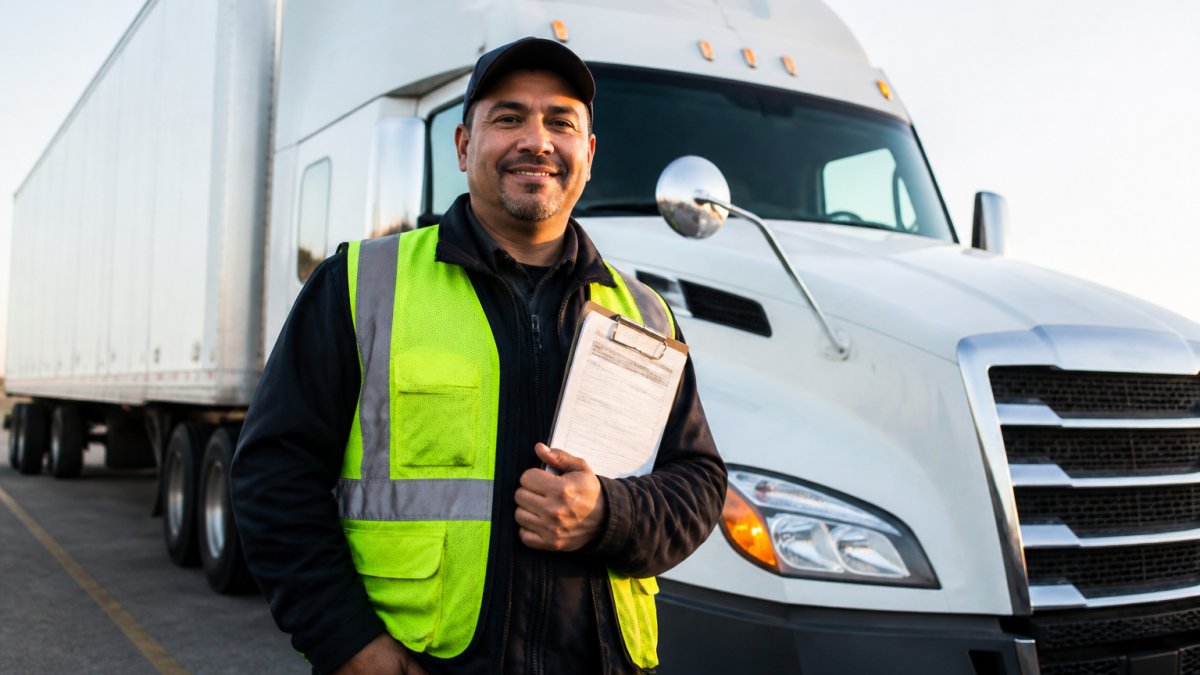
The first step is completing your SAP evaluation and treatment as outlined in Steps 1-4.
RTDStep5 simplifies this final step.
The FMCSA Drug and Alcohol Clearinghouse query system allows you to verify your status in real time.
Frequently Asked Questions
What are the five drugs tested for under DOT and FMCSA drug testing rules?
DOT and FMCSA regulations require testing for five controlled substances: marijuana (THC), cocaine, amphetamines, opioids, and phencyclidine (PCP). Testing is performed using a five-panel urine test collected at a certified laboratory. Each sample is analyzed for these five drugs and verified by a Medical Review Officer (MRO) to confirm results before they are reported to employers or the FMCSA Drug and Alcohol Clearinghouse.
What are the FMCSA random drug testing rates employers must maintain?
Under 49 CFR Part 40, employers must conduct random drug testing at a minimum annual rate of 50% of their average number of safety-sensitive employees, and alcohol testing at a minimum of 10%. These rates are set by the FMCSA and apply to all commercial motor vehicle operators. Employers who fail to meet these minimums face penalties and compliance violations.
What happens after a driver fails or refuses a DOT drug test?
A failed or refused drug test results in immediate removal from safety-sensitive duties. The driver is placed in prohibited status in the FMCSA Drug and Alcohol Clearinghouse and must complete the five-step return-to-duty process: evaluation by a Substance Abuse Professional (SAP), education or treatment, a negative return-to-duty test, a Clearinghouse query, and follow-up testing. Only after completing all five steps and obtaining a negative RTD test result can the driver’s prohibited status be cleared.
How does the FMCSA Drug and Alcohol Clearinghouse affect my driving status?
The FMCSA Clearinghouse is a federal database that tracks drivers with a history of drug or alcohol violations. When you fail or refuse a test, you are flagged as prohibited and cannot perform safety-sensitive functions. Employers and C/TPAs query the Clearinghouse before hiring or testing drivers. You must complete the return-to-duty process and pass your final Step 5 test, which is then reported to the Clearinghouse to clear your prohibited status and restore your eligibility to drive commercially.
What is the difference between pre-employment, random, post-accident, and reasonable-suspicion testing?
Pre-employment testing occurs before a driver is hired and safety-sensitive duties begin. Random testing is conducted without warning throughout the year at the rates set by FMCSA (50% drug, 10% alcohol). Post-accident testing is required after a motor vehicle accident meeting specific FMCSA criteria. Reasonable-suspicion testing is ordered when a supervisor observes signs of impairment or policy violation. Each test type has different procedures and timing requirements under 49 CFR Part 40.
Can I complete my Step 5 return-to-duty test if I’m unemployed or between jobs?
Yes. While your previous employer or a C/TPA typically orders your Step 5 test, you can arrange testing independently through a DOT-compliant C/TPA even if you are not currently employed. The test must still meet all FMCSA requirements, be collected at a certified site, and be reported to the Clearinghouse.
How long does it take to clear my prohibited status after passing my return-to-duty test?
After you pass your Step 5 return-to-duty test, the C/TPA reports the negative result to the FMCSA Drug and Alcohol Clearinghouse. Your prohibited status is cleared once the Clearinghouse receives and processes the report, which typically occurs within one to three business days. You can then resume safety-sensitive driving duties. The exact timeline depends on when the test result is submitted and processed by the Clearinghouse.
Clearing your prohibited status requires completing all five return-to-duty steps correctly and on time. RTDStep5 specializes in Step 5, the final return-to-duty test and Clearinghouse reporting. With access to 24,000+ DOT-compliant testing sites nationwide and FMCSA registration as a C/TPA, we ensure your test is conducted according to federal procedures and reported accurately to clear your prohibited status. Get started on Step 5 now and take control of your return to driving.
